



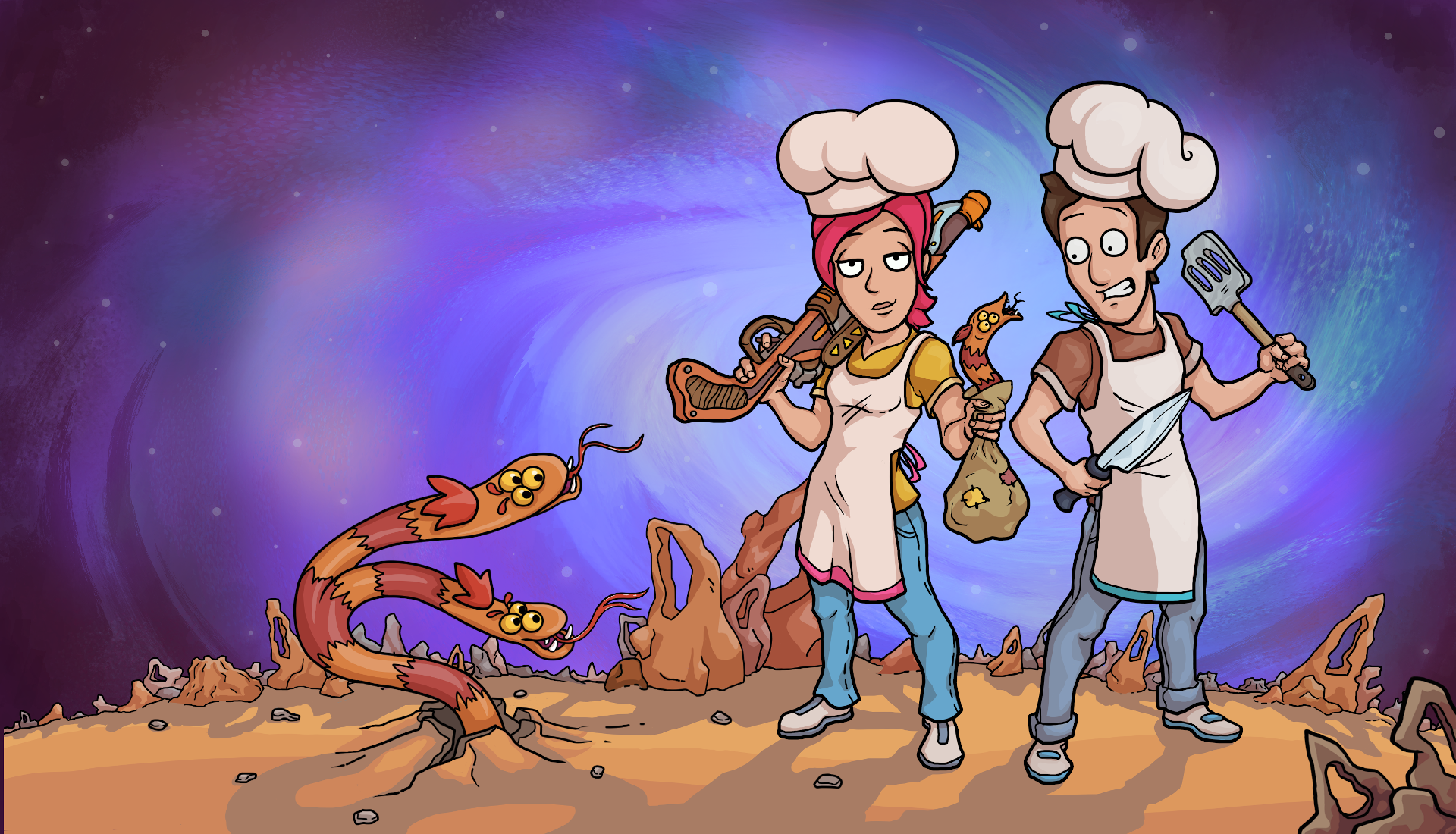

Space Chef is a cozy sci-fi cooking game that distinguishes itself through mechanical depth and player-led exploration. Set across a sprawling galaxy, the game tasks players with preparing meals for a wide range of customers, blending traditionally relaxing cozy-game sensibilities with layered systems involving exploration, crafting, combat, and light management. While its execution isn’t without friction, the overall experience is fun and engaging.
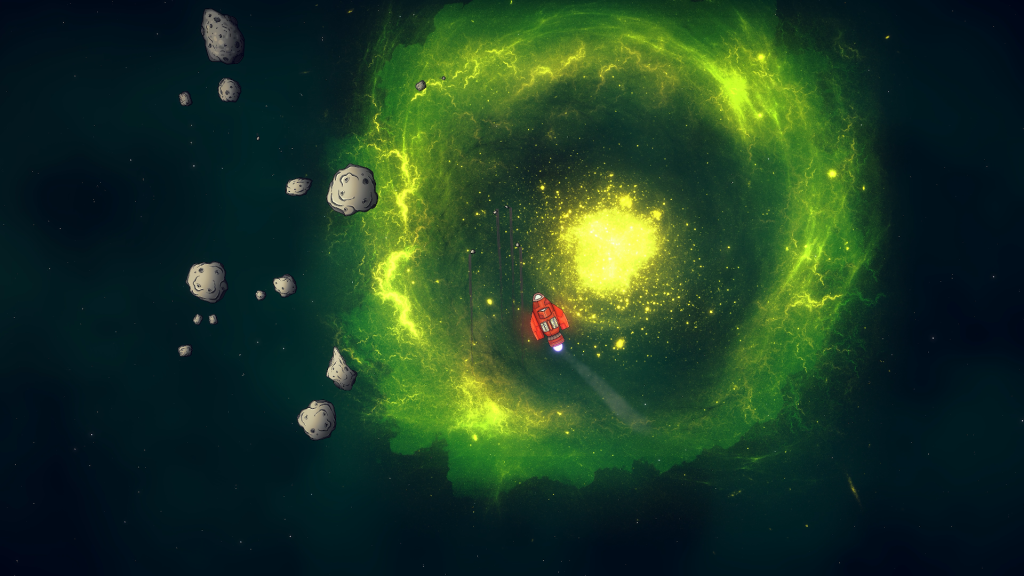
At its core, the Space Chef loop is centered around: exploration and discovery, ingredient hunting and gathering, recipe creation and delivery, and customization. Players are encouraged to explore a large, open-ended galaxy filled with planets and floating structures, landing on them to uncover new ingredients, tools, and alien cultures. This large space sandbox entices the player to explore and experiment with gathered goods, often rewarding you with meaningful discoveries, though its lack of direction tends to become a little frustrating.
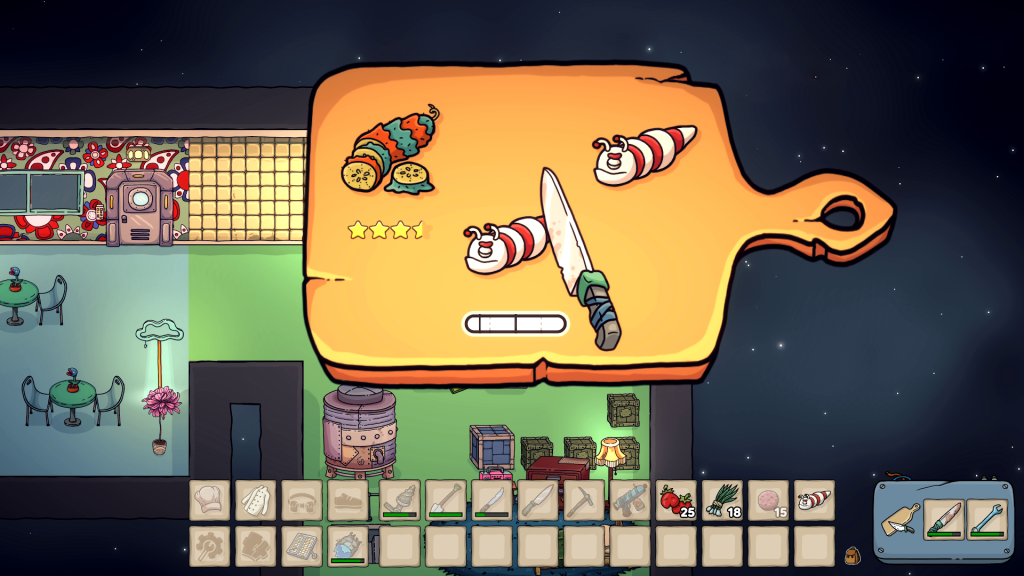
Ingredient gathering is split between hunting and environmental harvesting. Players begin with a spatula and gradually unlock a variety of weapons, each with unique behaviors and a durability system that requires recrafting. Replacing broken tools involves collecting space debris and processing materials through multiple crafting steps, adding some strategy but also introducing a time consuming detour that interrupts the cooking-focused flow. Harvesting plants is similarly layered, sometimes requiring specialized tools or machines that must be crafted after further exploration.
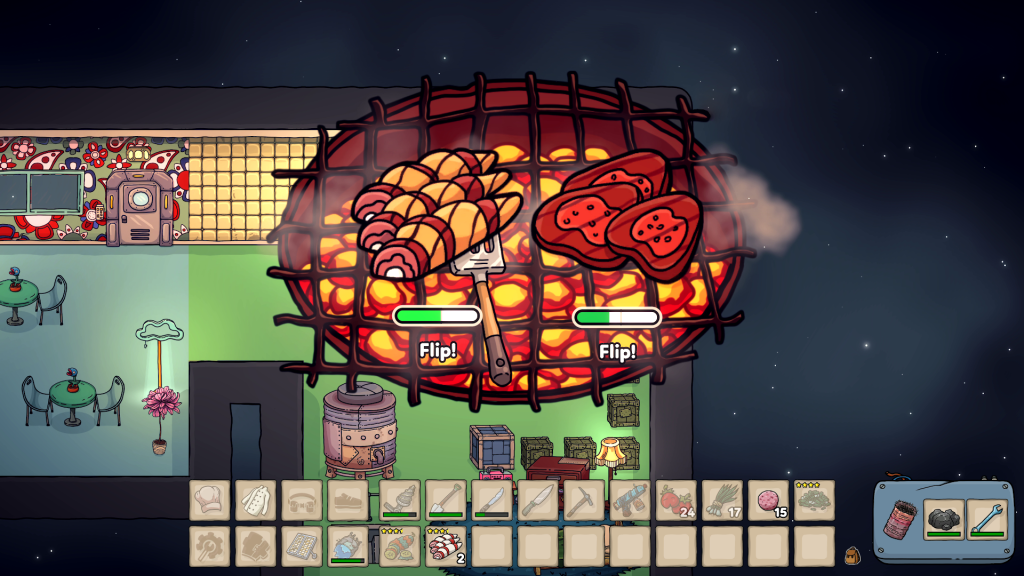
The recipe loop ties all of these systems together. New ingredients unlock new recipes, which in turn push players back into exploration, creating fun progression structure. However, all meals must be prepared at the player’s home kitchen, meaning long return trips are frequent. This, combined with a chef fatigue system that forces players to rest, similar to time restrictions in games like Stardew Valley. These sort of constraints disrupt momentum, even if it adds a layer of realism.
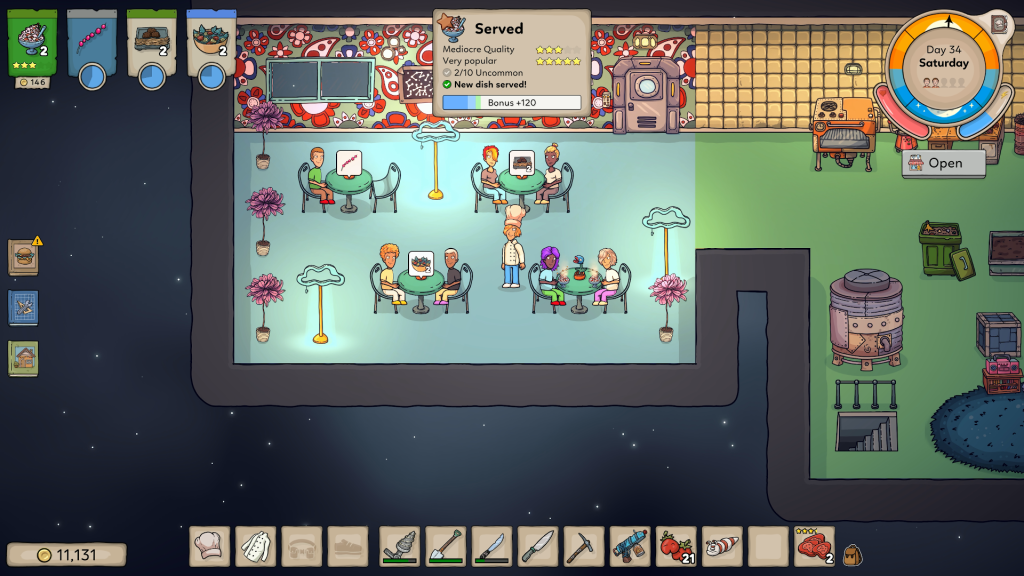
Once the player has progressed far enough, players can eventually open a restaurant to accept delivery requests. Performance is judged by speed and efficiency, influencing customer satisfaction, restaurant popularity, and the chef’s star-based progression. While it’s easy to accidentally open the restaurant and field unwanted requests, the delivery system is ultimately rewarding, with clear feedback and satisfying payoffs for well-executed dishes.
Customization rounds out the experience in Space Chef, allowing players to decorate and organize their home and restaurant with a wide range of functional and aesthetic options. New decor ideas are discovered through exploration and visiting cities, offering a fun and creative way to express yourself in your kitchen.
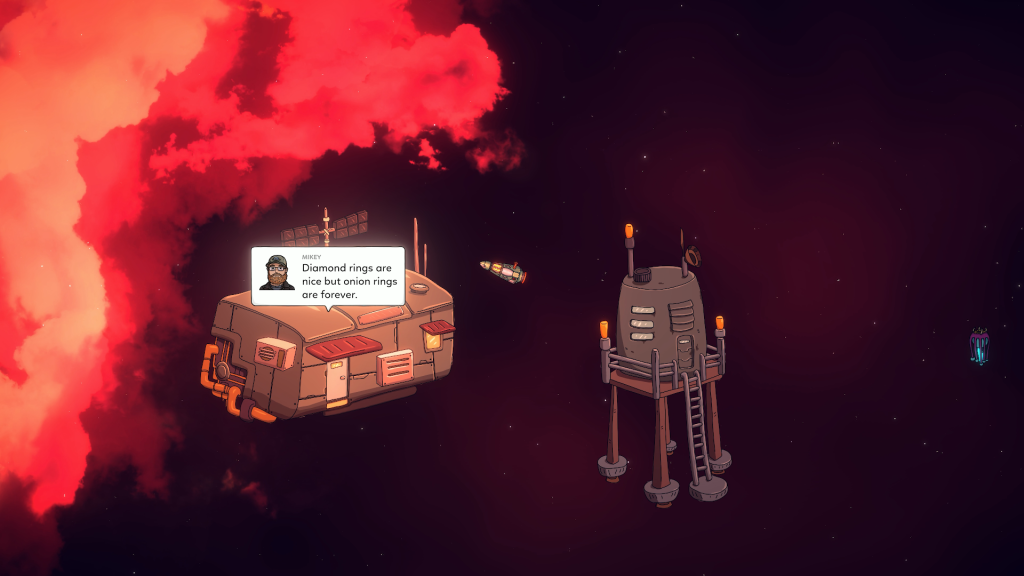
Overall, Space Chef is a cozy game with a mechanical backbone. Its open-ended structure, layered systems, and emphasis on discovery make it more demanding than most games in the genre, but also more rewarding for players willing to engage patiently. While directionless design choices and time cycles can be frustrating, the exploration and crafting are quite fun and create an entertaining experience of being a Space Chef.