







I remember the first time I experienced GoldenEye 007. It wasn’t the controls, the visuals, or even seeing it on a large CRT at my friend’s house. No, it was a way for my friend to test his dad’s new home theater audio setup to hear that awesome pause menu music, gun sounds, and explosions the game had to offer. Developer Replicant D6 does well to emulate the style and feel of Rare’s Nintendo 64 shooters GoldenEye 007 and Perfect Dark like how I remember. However, Agent 64: Spies Never Die struggles to stand on its own. Its story is forgettable, the multiplayer is serviceable, and the alternate modes force you to retread boring campaign levels. There’s still plenty of fun and replayability to be had, especially with friends, where its inspirations trigger fond nostalgia.

The story begins with John Walter, a silver fox of a secret agent on the couch of his penthouse playing his Nintendo 64. It’s here that he’s interrupted and assaulted, and must shoot his way out to safety. He learns that this is the doing of his nemesis, Dominic Pulp. Cutscenes are unvoiced, text affairs with minimal mouth movements that’s very much like the games it takes inspiration from, but that’s not exactly a plus in any column. John soon reunites with his daughter Dana, and she often joins him on the globe-trotting adventure to stop Dominic once and for all. Weirdly, the plot feels like I’m starting with the second game in a trilogy, as opposed to something starting from the beginning.
Playing through the game’s campaign offers little excitement, as the levels themselves are rather mundane and unmemorable or hallmarks to speak of. Just when things begin to ramp up and show a glimmer of thrill, is when the game is about to cross the finish line. You’ll progress linearly though each of the game’s levels, but there will be points where it gates your progression arbitrarily, requiring cyphers, a type of currency in order to unlock your path forward. The gate is pretty easy to get around, as replaying a level at a higher or lower difficulty will likely get what you need, it just slows you down for a moment. There are fourteen levels across four acts, and will take you roughly four hours if you choose to replay any of the given levels at a higher difficulty if you are seeking to attain more cyphers. There are three difficulties to play missions on: Agent, Special Agent, and 64 Agent. Agent has the most basic set objectives, Special Agent has a more advanced set of objectives where you should start to be more careful, and 64 Agent has the most difficult enemies and complex objectives to complete. During my time with it, I lowered and raised the difficulty based on how things went over multiple tries, and it feels good to have that flexibility. It should also be noted that there’s no checkpoints or saving during a mission, so they must be completed in one go. This is very doable, and only a few missions tripped me up where objectives would fail due to the enemy sabotaging them, me not acting quick enough, or in some cases accidentally shooting and destroying the objective. It’s as straightforward as it gets, but no one will be talking about the missions in Agent 64: Spies Never Die after they finish them.

The gunplay is exactly what you want, achieving that N64 style of generous auto-aim, and the bonus is that the game does this extremely well on mouse and keyboard. Though if you want precision, you can right-click on the mouse to get a reticle, a zoomed in view, and reduced sensitivity to dial in your shots. Agent 64: Spies Never Die features a fairly standard arsenal of weapons like a pistol, that same pistol but a silenced variant, a tommy gun, SMGs, a shotgun, assault rifles, and even a sniper rifle. There’s a surprise weapon that comes late in the campaign, but overall there’s not really a standout gun, and it just comes down to personal preference on what you want to use. Thankfully you can hold all these weapons on you at once, and plenty of ammo for them that you don’t even have to switch them out.
There are gadgets you’ll have access to like EMPs, remote C4, and other doodads that rarely get used, and often don’t have reasons to be used except when completing specific mission objectives. True to the era, there’s no jump or sprint, so moving around in these environments require you to think quickly and carefully. In addition to the fact that there’s no saving during a mission, there’s also no health pick-ups. There are bulletproof vests that can give you armor on-top of whatever health you have. These will be strewn about levels, but on the higher difficulties will be rare to non-existent.

Alternate modes are where you’ll find the game’s longevity. Contracts are a part of the story mode, where finding hidden face masks will unlock a variation of a story mission with a certain stipulation. The alternate version of the first mission requires you to survive sixy seconds, where each kill nets you two seconds. Learning enemy placement and moving consistently is the key to success, but it’s a tough contract to complete, especially based on the first mission. Later there’s an alternate version of a mission with the same rules, except I’m only equipped with only my hands and have to slap enemies, requiring I be within kissing distance to keep the time accruing. Paradox mode operates similarly, and introduces modifiers to playing through a mission, and can often be perceived as cheat codes. It’s here you can equip an unlocked modifier such as infinite ammo.
The entire game can be played via co-op, and that’s really rad, allowing you to switch between different modes and bring your friends with you all the way through. There’s a multiplayer mode, and it’s a fun but flawed, and fairly uninhabited part of the game. It’s something that can only be enhanced if you have a group of friends to play with. If that’s not the case, there’s a series of solo Challenge Leagues to partake in that emulate multiplayer, often stacking the odds against you, and giving you a really good obstacles to overcome, replete with par times to beat on top of that. Overall, there’s a great suite of modes to play that you’ll find your favorite shortly.
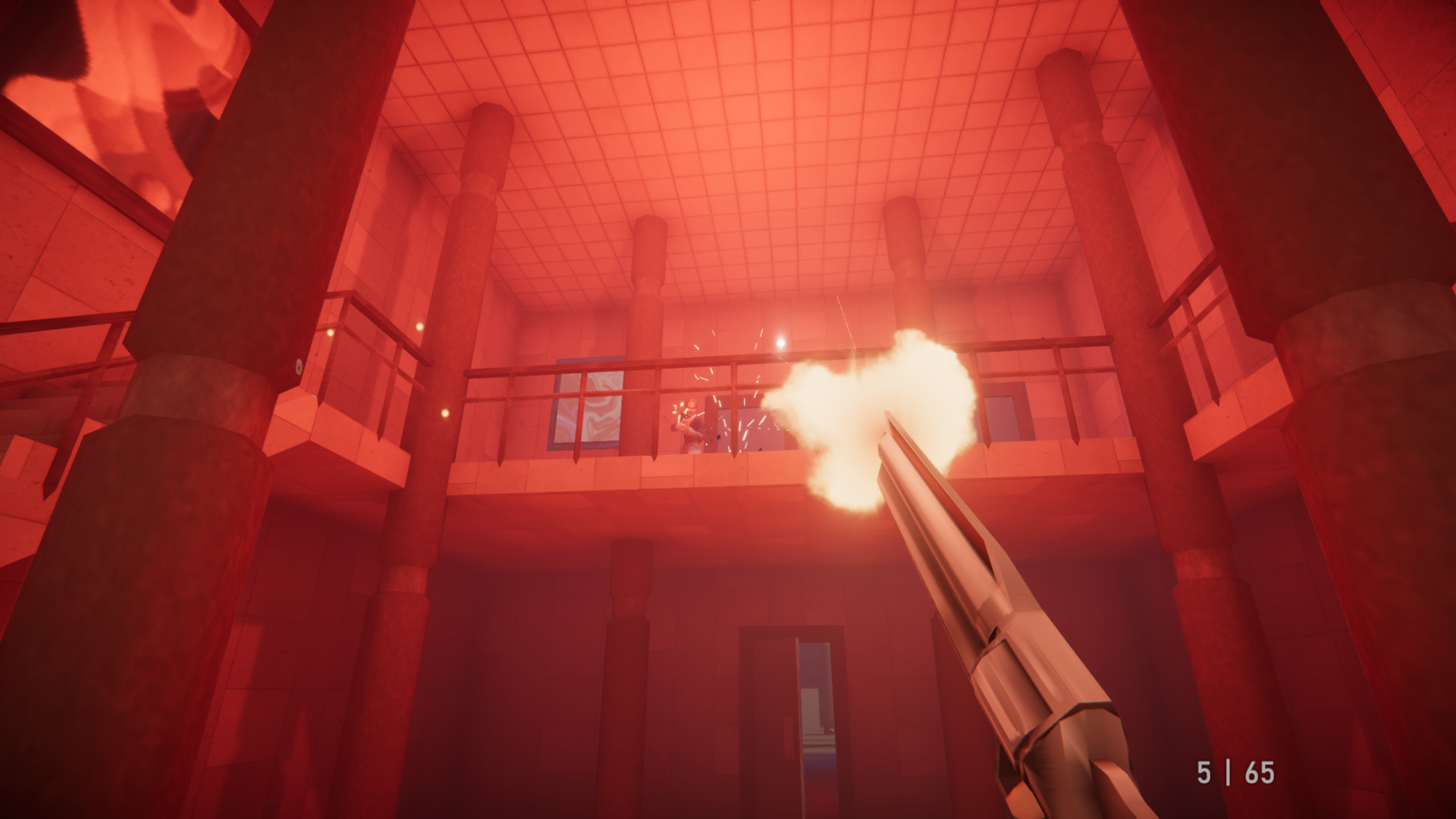
This is a decidedly retro game, and it obviously runs great. I was able to get maximum framerate of my monitor, at 180fps at all times. There is an optional CRT filter that you can turn on, though I found this to be more of a VHS filter, with lots of blur and smudgy textures. It’s glorious in its own right, but to be able to see things clearly, I played the game with it off.
Scott's PC Specs:
Linux 7.1.4-1-cachyosIntel Core i9 13900K @ 5.8GHzASUS ROG RYUJIN II 360 ARGB AIO Liquid CPU CoolerG.SKILL TRIDENT Z5 6000MHZ 64GB (32×2) DDR5 RAMASUS ROG Strix GeForce RTX 4080 16GB GDDR6XWD_BLACK SN850X M.2 (8 TB)LG UltraGear 34GP950B-G (21:9 Ultrawide @ 3440×1440)

Agent 64: Spies Never Die is an homage to a bygone era of shooters that we don’t see attempted today. It’s retro to a fault, and it’s unremarkable campaign hurts it somewhat, but thankfully its other modes does a lot of the heavy lifting. Agent 64: Spies Never Die offers a ton of replaybility for you and your friends to enjoy for as long as you want, and it doesn’t demand anything for the enjoyment it gives.