




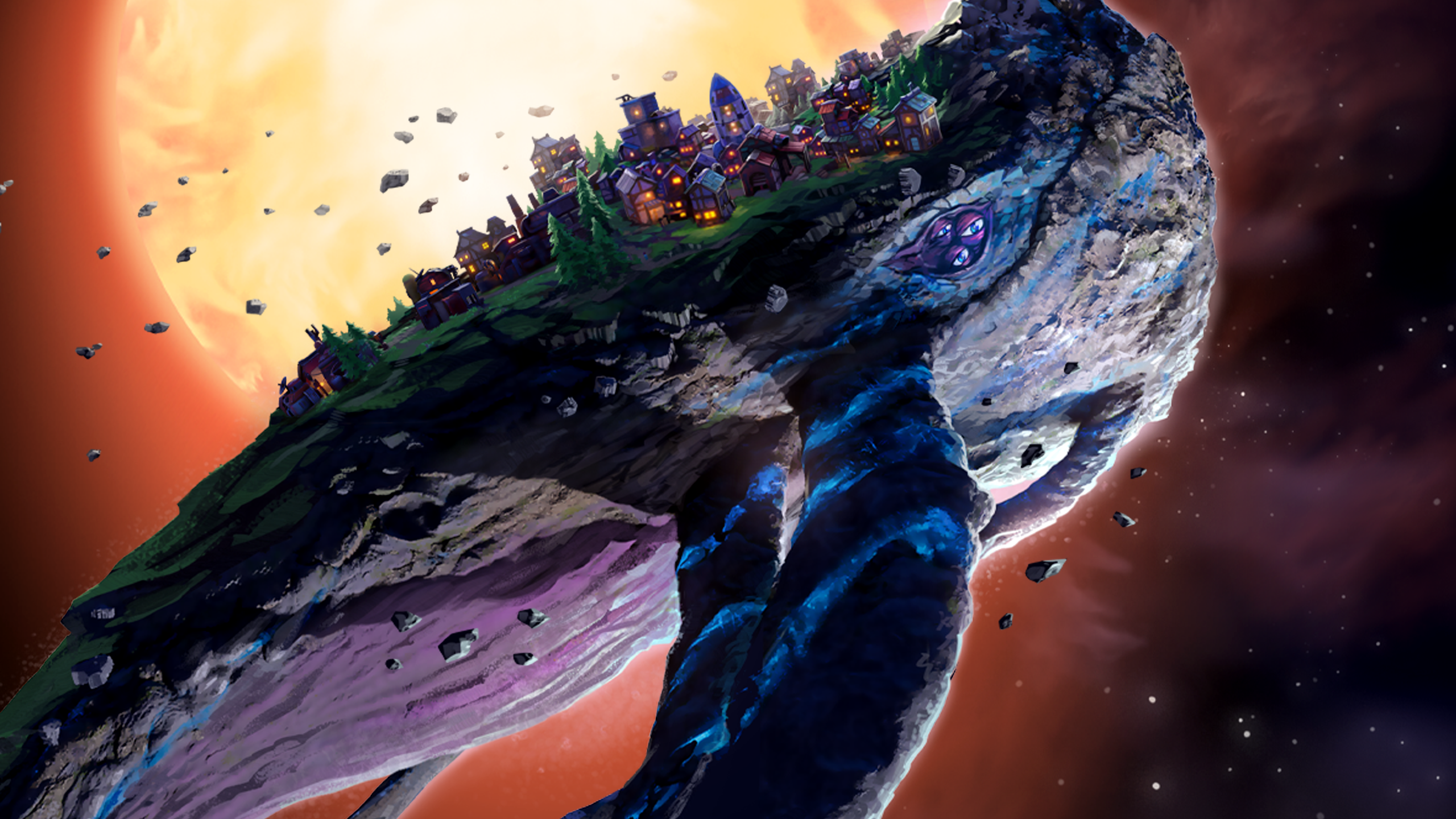

Beyond These Stars is an interesting new city-builder in a weird new sub-genre. Based off of the first game, Before We Leave by developer Balancing Monkey Games, Beyond These Stars takes the cozy city-builder model and has you partnering up with local megafauna creatures to construct a city on their back as they move around the world. Just as with the first game, you will create a sprawling city on a plot of land and monopolize the resources to build bigger and better buildings and tech. You will care for your humanoid people called Peeps and task them with gathering food and materials to build up their city on the hex-tiled land. The biggest difference with Beyond These Stars is you now have the ability to search and find new planets. This is because your Peeps will be riding on the back of a hungry space whale as it navigates the galaxy in search of food to fuel itself. What was once a dangerous and strange looming creature, may evolve into a symbiotic and comforting relationship.

After being chased underground by the space whales and their insatiable appetite, the Peeps reach the pinnacle and achieve space travel by the end of the first game. We start off Beyond These Stars looking towards a curious space whale. This one is acting differently as it is not trying to consume the Peeps land structures above ground. The Peeps scientists have found a way to lure in the space whale and are set on using their rocket to land on the whale. After landing on the back of the whale the Peeps find multiple resources and start to mine and start an outpost on the back of the space whale. Something happens and the space whale is spooked which causes the space whale to speed off into another far distant region in space. Now far away from their planet, the Peeps have to find a way to survive. After settling down and establishing food and water for their people, the Peeps look towards a strange blinking device on the other side of a river. Soon they advance their settlement to reach the appropriate tech and are able to investigate the almost alien looking tech across the river. With this they find the alien tech is actually a way to communicate with the space whale, defying all known Peep scientific logic as the whales were known to only be driven by hunger and their natural instincts. With this tech the Peeps are able to communicate with the sentient space whale and the space whale and Peeps agree on a name for them, Kewa. On the back of Kewa, is now the new home of this exploratory section of Peeps. Obviously their first inclinations are to find a way home, but they are going to find out that this accident will take them far beyond their planet and the life they knew in the underground. Their journey with Kewa will be an exciting new one filled with new planets to explore, new resources to find, new sentient species to meet, and even new histories of the Peep race to discover.
If you have played the first game, Before We Leave, you will know much of the main mechanics of the game. Honestly, if you have played any city-builder you will know how the game operates. You start out with the small landing craft with 30 Peeps on board. Build out roads (which are free by the way) and place structures along those roads. You will start with potato patches and homes for your Peeps. To build those structures you will also need wood which Kewa just so happens to have in abundance. On the back of Kewa the Peeps have many resources such as water, minerals, and trees. As with other city-builders you will be mining wood and other materials to grow your city. Also like other city-builders, those minerals are finite in the locations you find them. However, unlike other city builders, some of these resources do more than just provide you with materials. See this game tries to teach conservation of natural resources. We are after all on the back of a living creature and the goal is to have a symbiotic relationship with our large host creature being that we depend on them for life. We don’t want to drain them of their resources entirely as it may hurt them. In this, we actually want to keep the trees growing on the back of Kewa as it helps with creating atmosphere for the Peeps to breathe and expand to new areas on the back of Kewa. As you progress through the game and gain more technology and knowledge you will inevitably start to create waste. Some of this waste product can be used in the production and manufacturing of other products. To keep your little city a bustlin’. However, as your city grows and new buildings are researched, the pollution output by the buildings become increasingly more harsh and start to affect the environment. Some buildings will create polluted areas near them and you will need to build cleaning stations to keep those areas clean. If the pollution becomes too high in an area the tiles become toxic. Any buildings on a toxic tile cease to function until that tile is cleaned. To clean it there is another temporary building that needs to be placed near it to clean up that toxic sludge. As you move further along in the game the Cleaning Station will gain the ability to handle the toxic tiles. As you can see, Beyond These Stars does little things to keep you cognizant of your Peeps affect on the environment of Kewa. Speaking of Kewa…
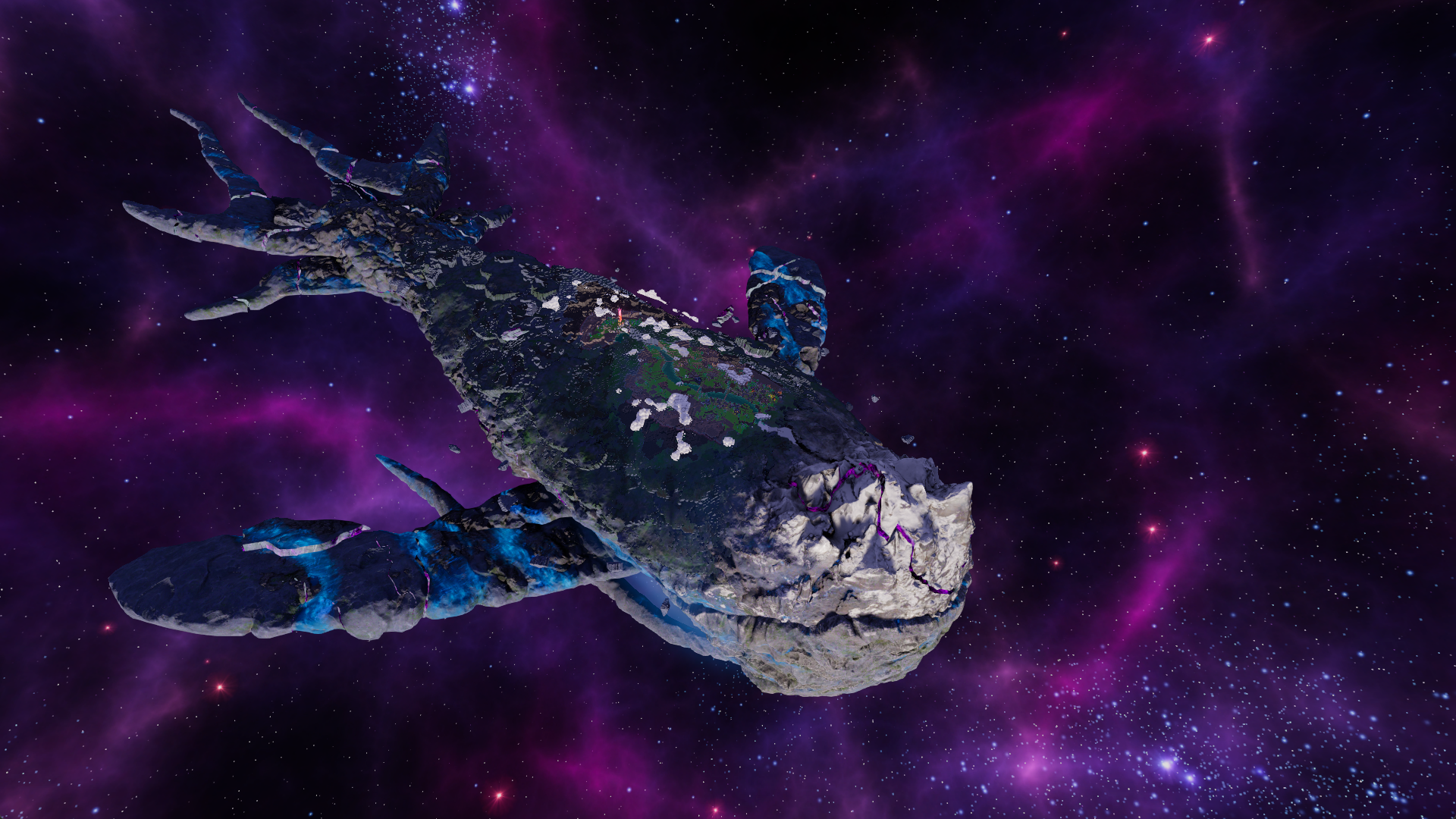
Kewa is not only the land mass that your Peeps are living on and mining, Kewa is also a ship to new worlds and planets across the galaxy! The map and mechanics that are used to send Kewa to different planets reminds me of the star map in Mass Effect. Once you press the overview button on the top of the screen you are taken to an overlay map. Here you have a type of fog of war where places that you and Kewa have not been near are blacked out. In this map you will click to an open hex tile to send Kewa there. You will see exclamation marks and markers here that will indicate there may be something worth checking out. After clicking, Kewa will start to move to the location in real game time. While they are moving, you can go back to your city on their back and continue your city-builder game. Once Kewa reaches the hex tile point on the map you will then be able to search the tile in depth more. Very similar to Mass Effect where you go to a galaxy and then can search other planets and items within that galaxy. The difference in Beyond These Stars is instead of Kewa flying around within the hex tile, the Peeps have created a scout drone that will do the scouting. In here you can find old Peep relics or alien artifacts. You can also find other planets that you can send a rocket to land on. To do that you will need to build a new rocket that will house some of your Peeps and materials so you can create a new settlement on this planet. This rocket will launch from the back of Kewa and will land onto the planet to be settled. Here you can then mine the minerals from the planet and send it back to the Base City on the back of Kewa. As the game continues on you will be spreading your Peeps throughout the universe to collect resources and learn more about the worlds around them. Although I did not dive too heavily into the resource sharing system, it seems very robust and can even be automated. If you have built a starport with landing pads on the settlements you can have the rockets ferry set amounts of resources to and from the base city. Over time, the idea is that you’ll build up a system of colonies focused around specific resources that you are not able to mine from Kewa. However, once Kewa moves away from that specific planet, the Peeps would have to return to that galaxy before they’d be able to gather its specific resources again.
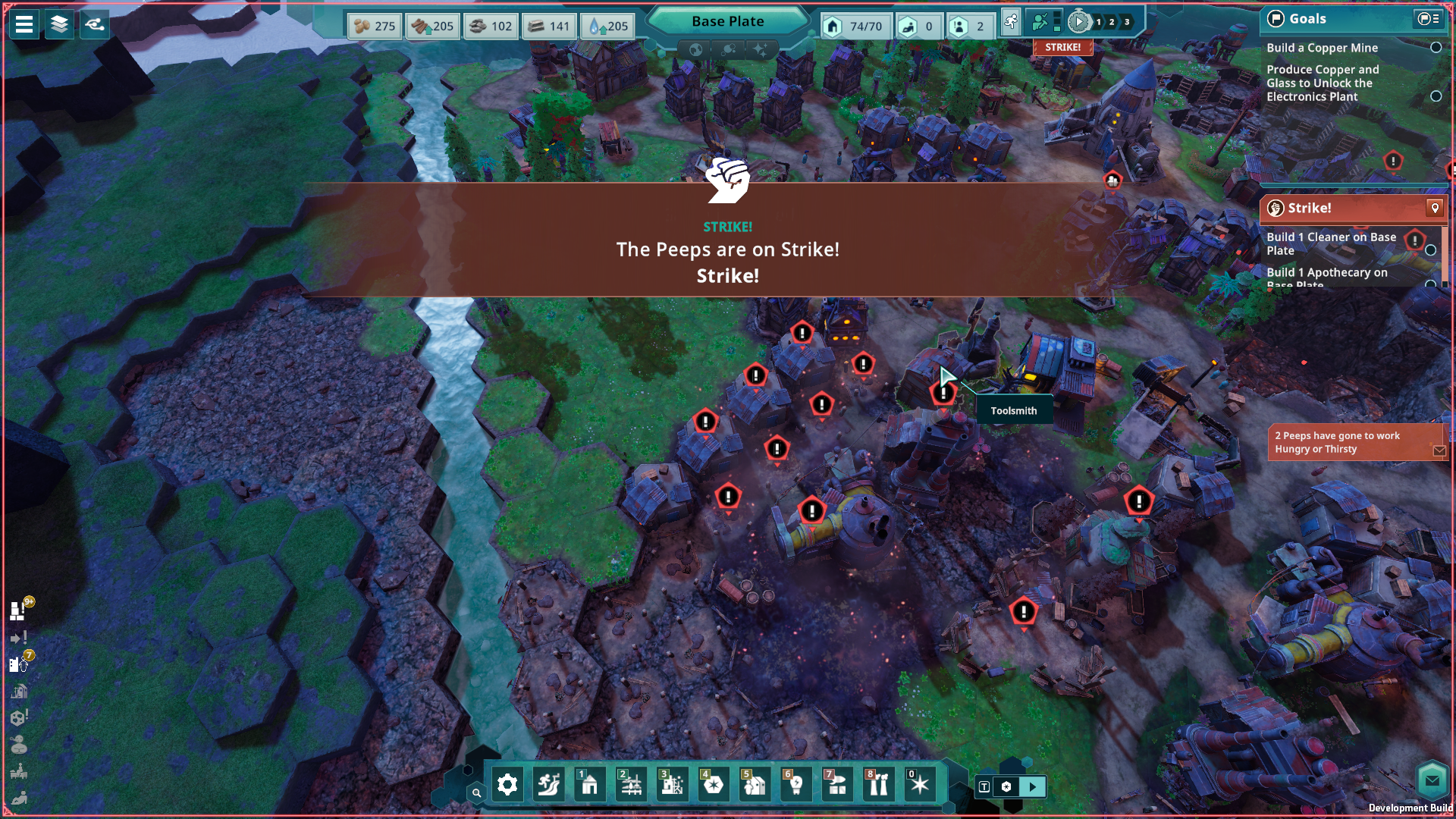
Even though you tend to have a fair amount of control of Kewa, they are still a sentient being and have the choice to not go to a location if they do not have the energy or you are polluting their back too much. That means while you can ask them to work with you, they may not always agree to do so. As Kewa is a living sentient being, if Kewa gets too hungry, they can certainly just fly off to a specific region of space to eat. This would be regardless of whether that’s somewhere you want to go or not. And some locations in the expansive universe are not the most hospitable for the Peeps without the tech or materials to survive. In my short time with the game I had sent Kewa into an extremely hot area of the universe and another area that was extremely cold. To Kewa this was not a big deal and honestly it has debris to feed on while in these areas. However, the Peeps were not so happy. The extreme temperatures would negatively affect the growth rate of the vegetation slowing food production. This in turn left little food and water for the Peeps causing unhappiness and strife. If Peeps go to work too many times hungry and unhappy they can stop working altogether or worse become sick. When they become sick they go home to rest and hopefully heal up. However, continuing in these conditions can cause death and loss of population which in turn means loss of workers and loss of production of the vital materials needed to survive. Not only are you trying to keep the Peeps happy and healthy, but your relationship with Kewa the space whale is also very important to success in the game.
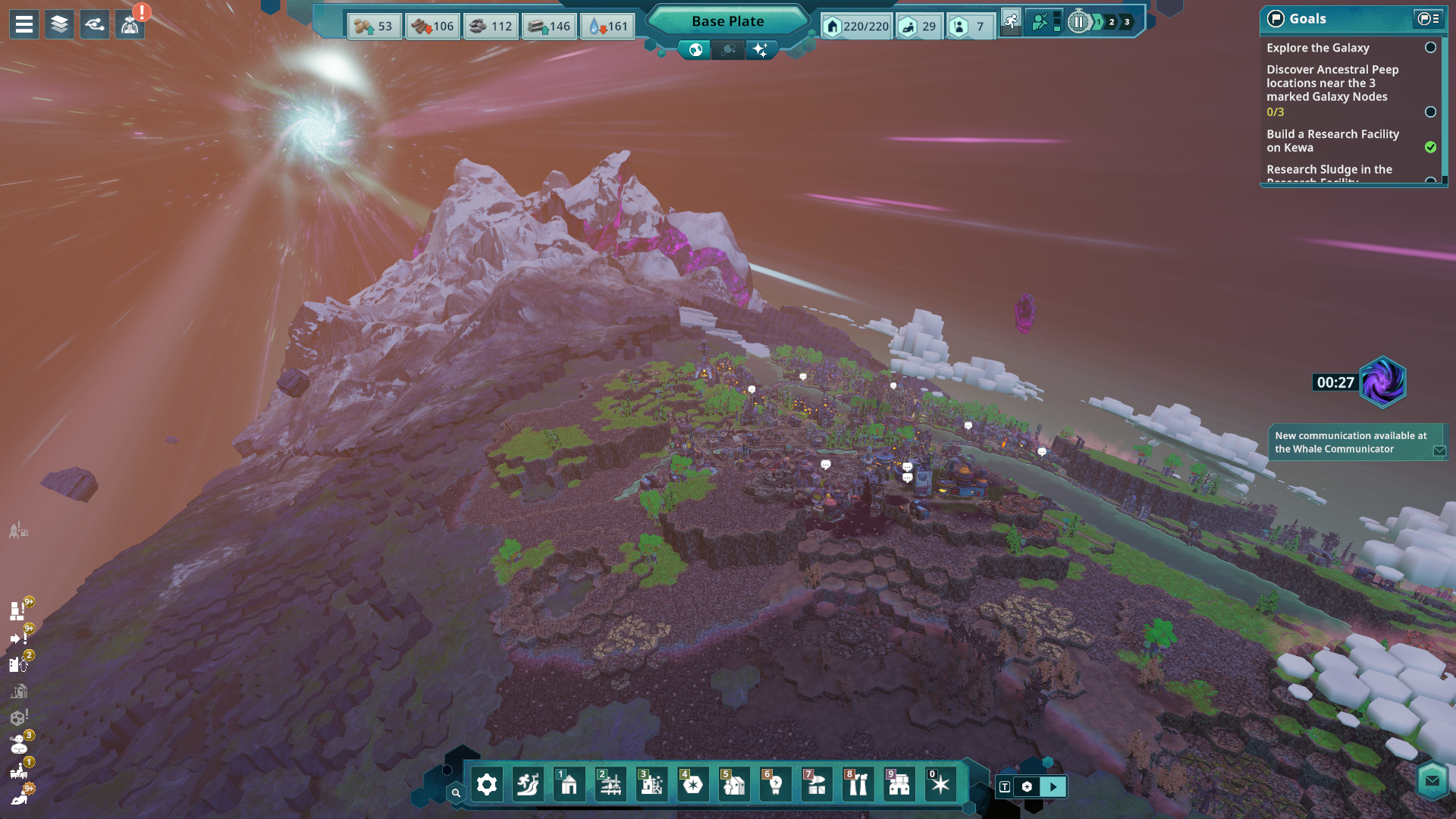
Keeping Kewa happy is not just making sure to send them to areas in the universe to feed and keeping their back free of pollutants. The Peeps must also talk directly with Kewa through the blinking alien artifact. Communing with the whale is a clunky, retro type screen displaying an old school text-based conversation. Kewa’s vast mind speaks more in music and melody than in normal speech patterns and it is an interesting take on in story communication. In these conversations the Peeps (you) have different dialogue choices which can have a positive or negative effect on Kewa. So upsetting Kewa and selecting the dialogue choices that allude to the Peeps only needing them for resources may not create the best outcome and may negatively affect Kewa’s willingness to help and listen.
As a more cozy type city-building gamer, I enjoyed the mechanics Beyond These Stars provided. There were plenty of other mechanics that I did not dive into with my short time in the game and I can most certainly see where this game can go from cozy to number based quickly. I chose to engage with the game on a more subtle level, enjoying the building and basic material gathering aspect. However, there is so much more to these systems that someone much more skilled in a game like Civilization or Age of Empires could sink their teeth into. Managing settlement resources and supply routes, expansion and proper by-product use, material storage, and alien commerce. Yes, you read that right. Not only do you mine resources and find them on other worlds, but you can trade with other creatures through the galaxies. I was not able to get too in-depth with the trading system in my time playing the game, but it does seem like trading can play heavily into the survival of your Peeps and along with the story as you go farther.
One mechanic of the game that I found very interesting was the environmental needs. Similar to Timberborn, Beyond These Stars will require you to dig paths in the land to direct or re-direct water to other locations of the land. By doing this you provide water to vegetation and dirt that are so thirsty for it. In turn this revitalization gives the Peeps, and you, more areas to explore and mine for resources and materials. Along with this water mechanic, you will need to plant trees to provide more atmosphere to also extend the usable land.
When playing games for fun, I typically do not invest much thought into music and audio so much of this section should be taken with a grain of salt. There is no direct voice acting for the dialogue, but there are character barks to differentiate the differences in who is speaking. I would have liked actual voice acting, but not having it does not detract from the story or game for me. The music is subtle and calm. It was not offensive or terribly distracting to me during my time playing. Although, I do typically play cozy games with a podcast or my own music playing and I did eventually do this. Ambient sounds and sound effects are smooth and unobtrusive. I did not have any point where I found the SFX noises to interfere with the game or my enjoyment.
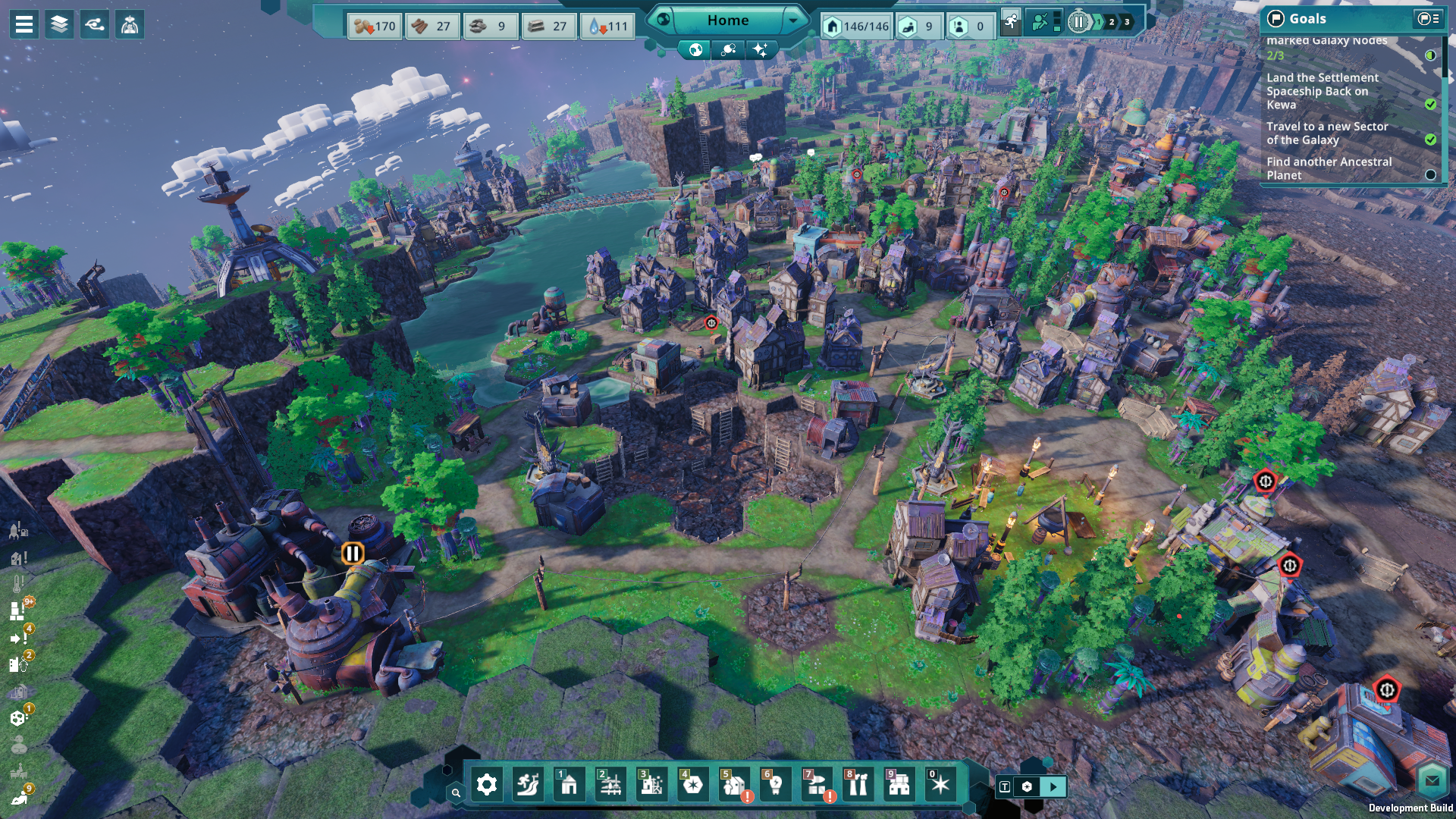
Although I am not a fan of the artistic style of the cutscenes and the dialogue overlays, they are crisp and done well. I did not feel any of the imagery was confusing or out of character with the game. It felt very much like the Slime Rancher art style and it was well done. The gameplay graphics are great. Things that needed to be lush and green were vibrant and felt very alive. Slight movements in the trees and foliage instilled a feeling of a gentle breeze across an open field perfect for a cozy game. The areas that were not flooded with water produced dull, muted colors with feelings of dying or withering. These areas looked sad and helped spark an emotional response to find a way to help reinvigorate the land and Kewa. Graphically the developers hit the mark really inciting in me emotional reactions to just the visuals I saw on screen. Very well done, especially in a genre where most of your game time is spent in a view that is miles away from the small details.
Beyond These Stars is a great continuation of the first game Before We Leave. The game continues the fun cozy game nature of Before We Leave and then builds upon it. Adding a new way to reach planets and a new way to think about that “ship” that is transporting you is a welcomed vision. I very much enjoyed my time with Beyond These Stars. It is a game I can see myself coming back to every now and again when I want a cozy game, but not a mindless game. With enough micro mechanics within the game, there are plenty of things to think about but it never really felt overwhelming. This feels like a game that is playable in short spurts and in long sittings and is replayable to near infinite.