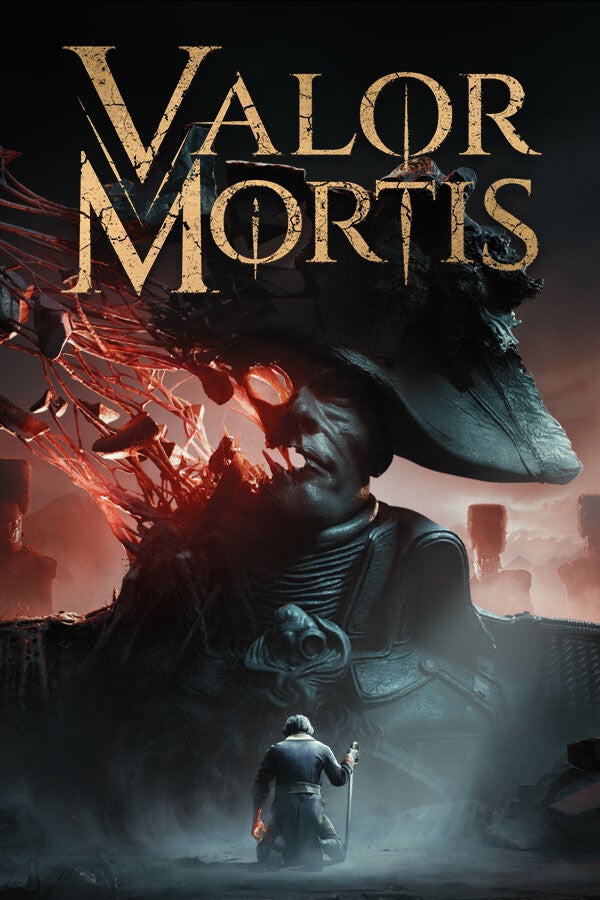
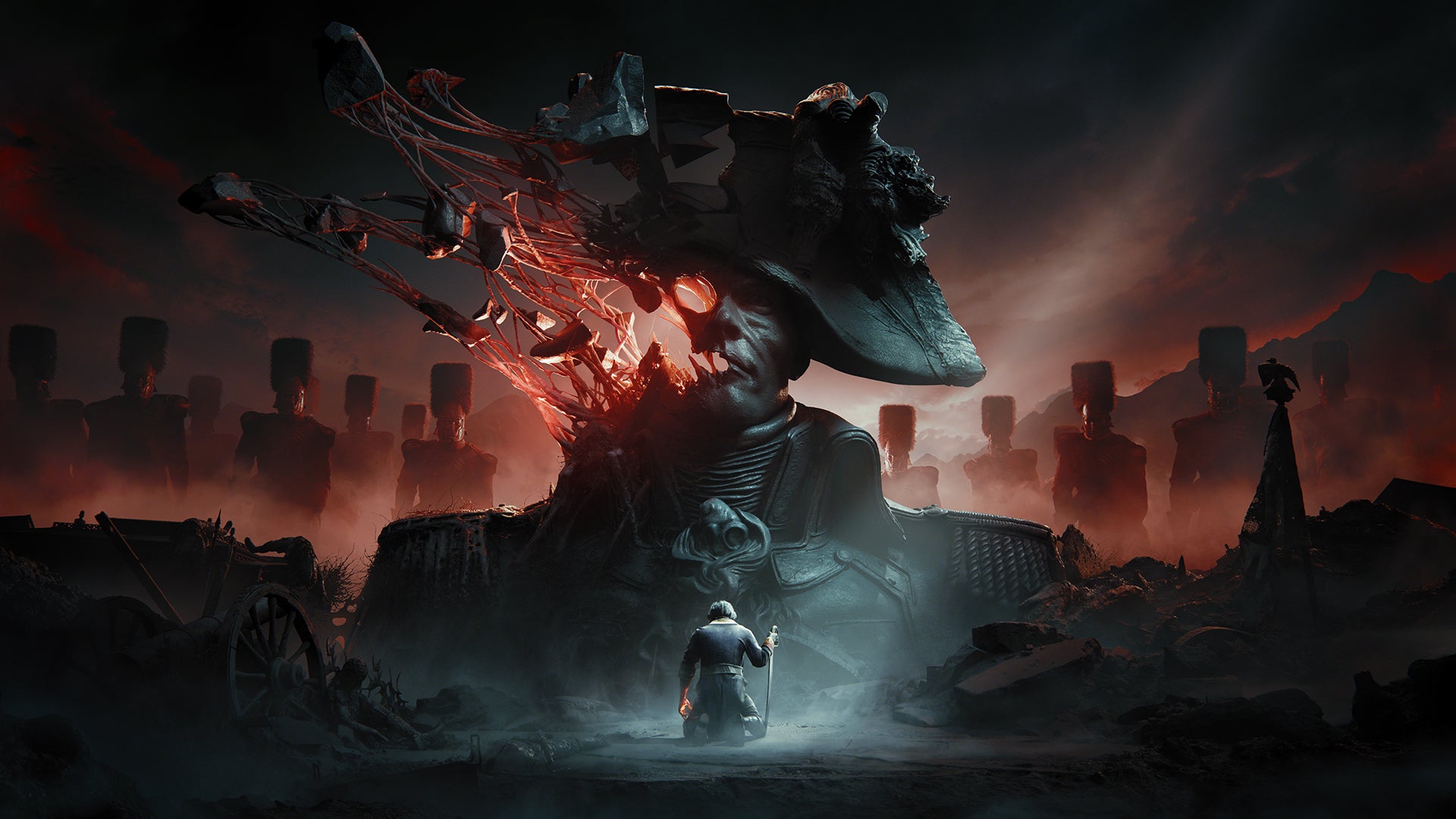
One More Level might not be a household name, but they’re about to be. The developers behind the ultrafast first-person slash ‘n’ dash Ghostrunner games were able to transition everything learnt from making those games into a new kind of Soulslike you won’t want to miss. It’s tough but fair, making for an exhilarating adventure from start to finish to explore a period not often exposed. Valor Mortis is a phenomenal action game that marries the high-stakes combat of a Soulslike with the ability-driven exploration of a Metroidvania, birthing a hybrid I’m dubbing the “First-Person Soulsvania.”
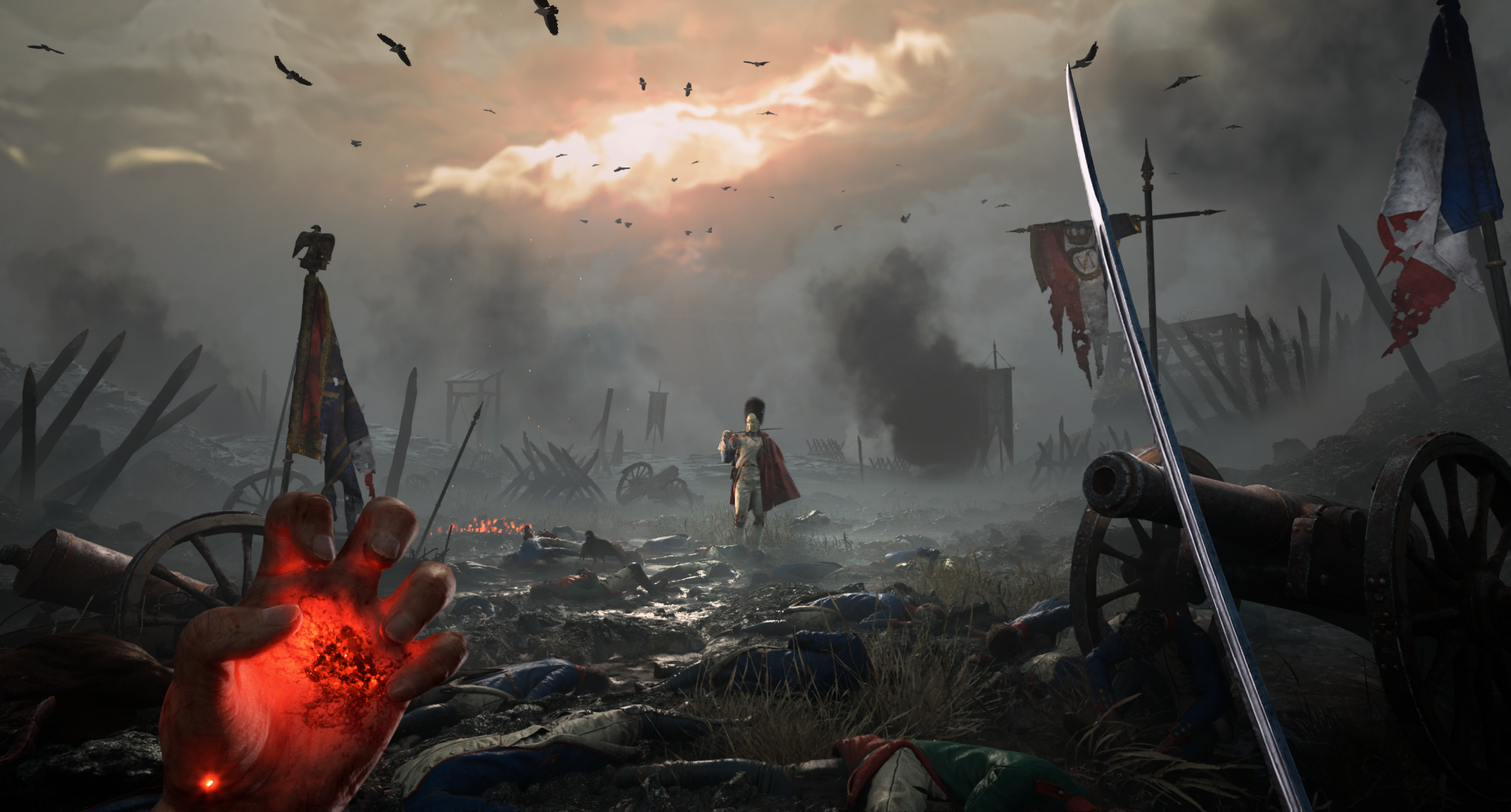
A mysterious plague has ravaged this alternate history 19th century. You play as William Dowsett, a soldier killed on the field of battle fighting for Napoleon, resurrected for purposes unknown and amnesia fully present. Exploring this new plague-ridden world introduces the enemies known as the Risen. While there aren’t many non-Risen around, William will encounter a select group of NPCs, each one full of mystery or outright delusion and denial of what’s actually going on.
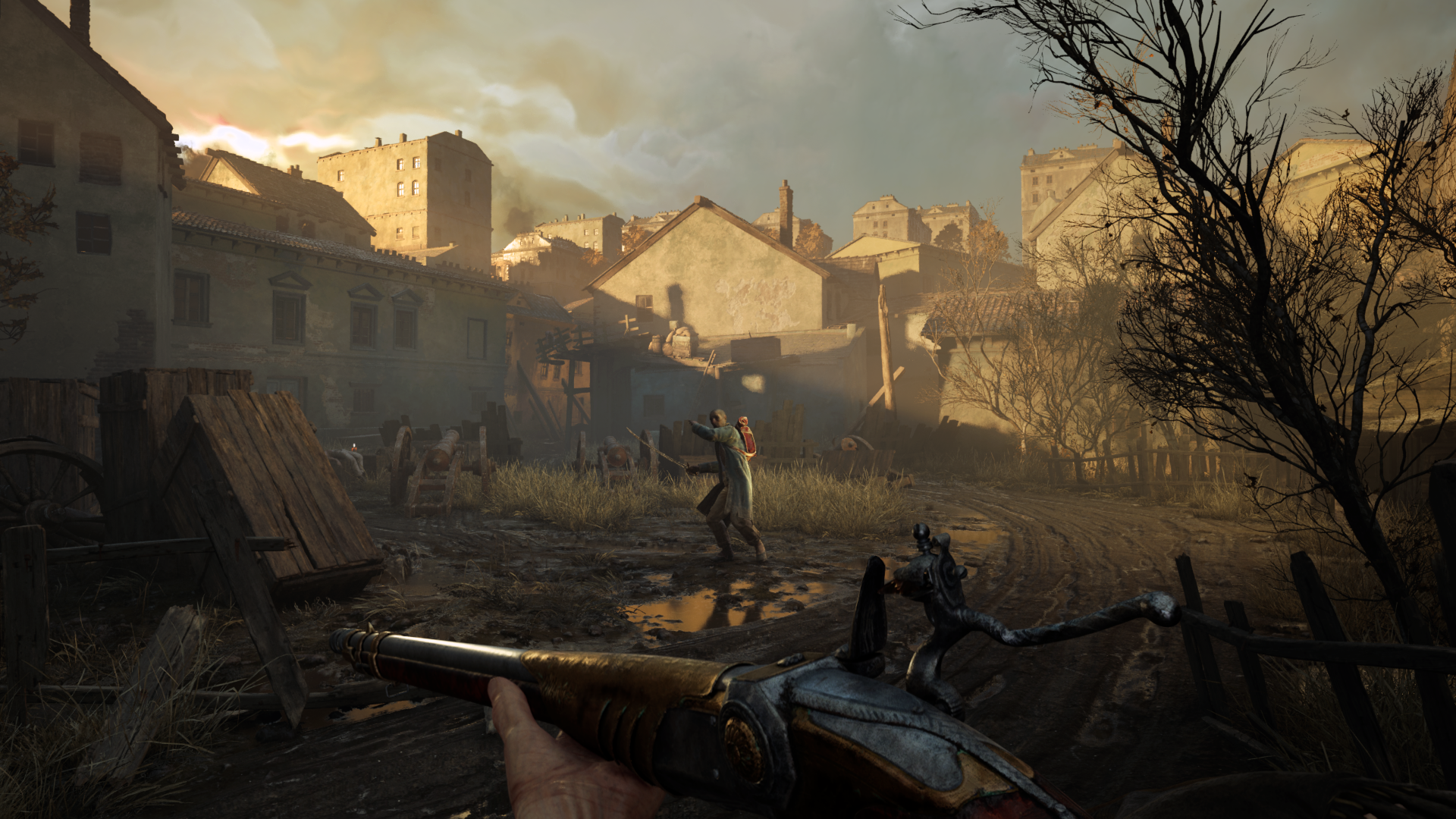
Valor Mortis is mostly a linear game, with optional backtracking. The areas you explore have alternate paths, shortcuts to unlock, and lots of items to find. It took me over 20 hours to see the credits, and it’ll take upwards of 30 hours to see and do everything. It’s not bite-sized by any means, but this is a very manageable game that’s worth your time.
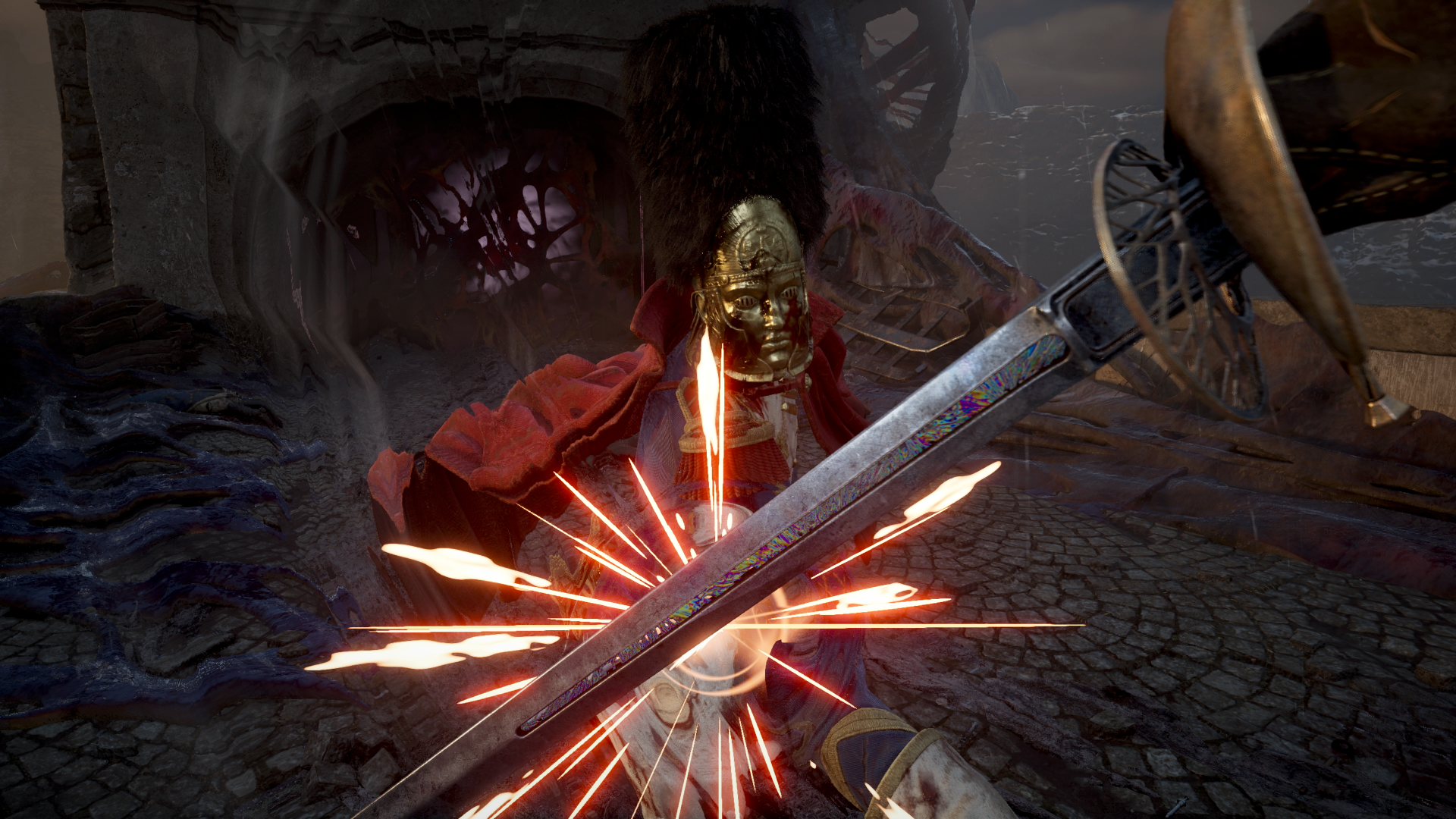
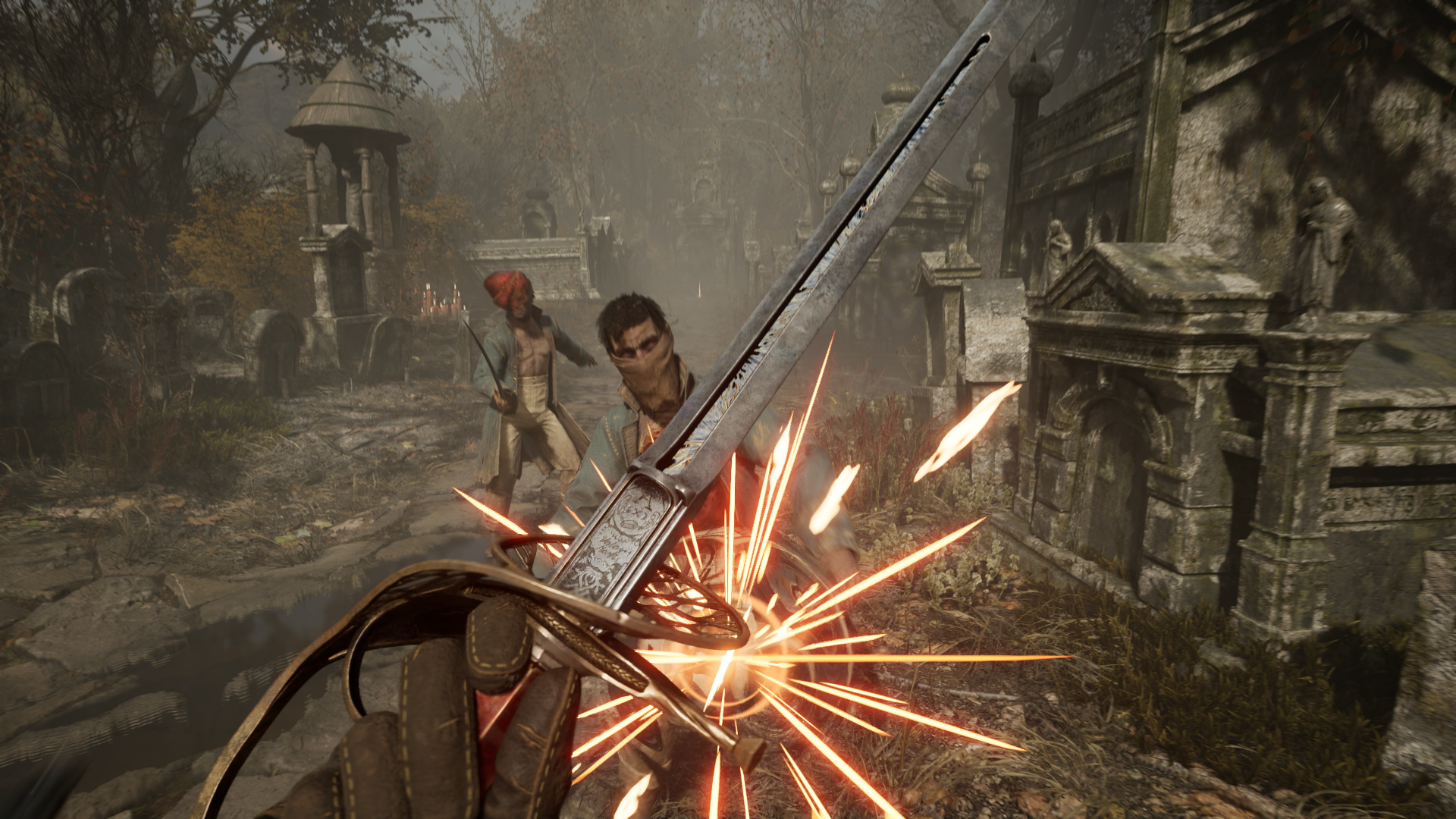
Stop me if you’ve heard this before: standard attacks can be parried, red attacks must be strictly avoided, and some enemy combos are a flurry of strikes that simply have to be blocked. Right out of the gate, the developer’s DNA shows, as the movement and the incredibly strong use of the first-person perspective really stand out. You are here to fight, and the combat in Valor Mortis is great, even if the default control scheme takes some getting used to. Out of the box, I found the keyboard & mouse controls to be slightly awkward compared to others in the space. I eventually had to remap the block command from ‘CTRL’ to Mouse Button 4 to make this feel more natural, which made combat way more manageable. You have a standard setup of light and heavy attacks, alongside a dodge, a block, and a necessary parry system. Combat systems for games in 2026 have prepared me well for this, and I was able to defeat all non-boss types with relative ease with successful parries and counter-attacks. However, as the Risen grow stronger, harder enemies demand sustained aggression and multiple parries to break their posture in order to use your counter-attacks.
To complement your blades, firearms play a specialized role in your loadout. Pistols act as precise tools to exploit conveniently glowing weak points. Rifles are incredibly slow to use but deliver massive, staggering damage. Abilities come in many forms, but the first one is a flamethrower type of power that feels strong from the start. Thrilling, unscripted moments permeate the game. For instance, I was able to sneak up on a basic risen and execute a takedown, then shoot a barrel which released a buggy that run over a group of enemies, and then cast a fire ability to burn two slithering risen that were encroaching on me to a crisp. It’s in these fluid, violent sequences that Valor Mortis truly shines.
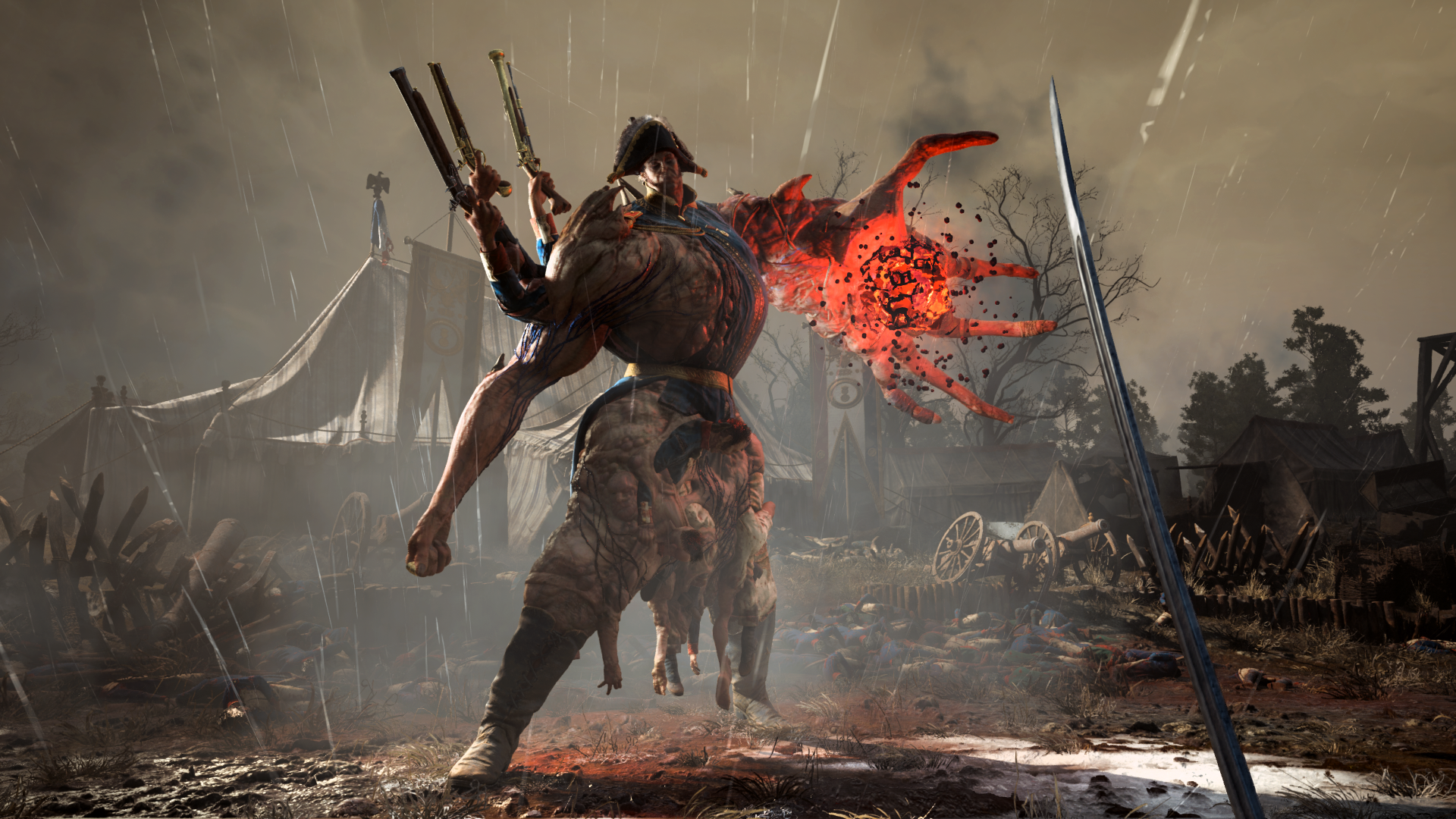
Speaking of bosses, there’s plenty of memorable and interesting ones you’ll encounter throughout the entire game with incredible set pieces. As it is a rite of passage, you are intended to lose the first boss fight, though the game remarkably allows you to actually win it if you are skilled enough. This boss is named Lothaire, and appears at the end of the second chapter, this time it’s for real. This encounter acts as a massive, Nioh-style skill check, meaning once you’ve felled him, the rest of the bosses aren’t as tough as him.
As you push deeper into the campaign, a satisfying Metroidvania element starts to reveal itself. These zones are connected by quick loading screens if you decide to backtrack manually, hiding brilliant shortcuts and secrets that make the world feel cohesive and intricately layered. Fast travel gets enabled to help you get around faster, as you’re encouraged to revisit older areas. It’s a bold mix that proves the first-person perspective still has a lot of untapped potential for melee combat.
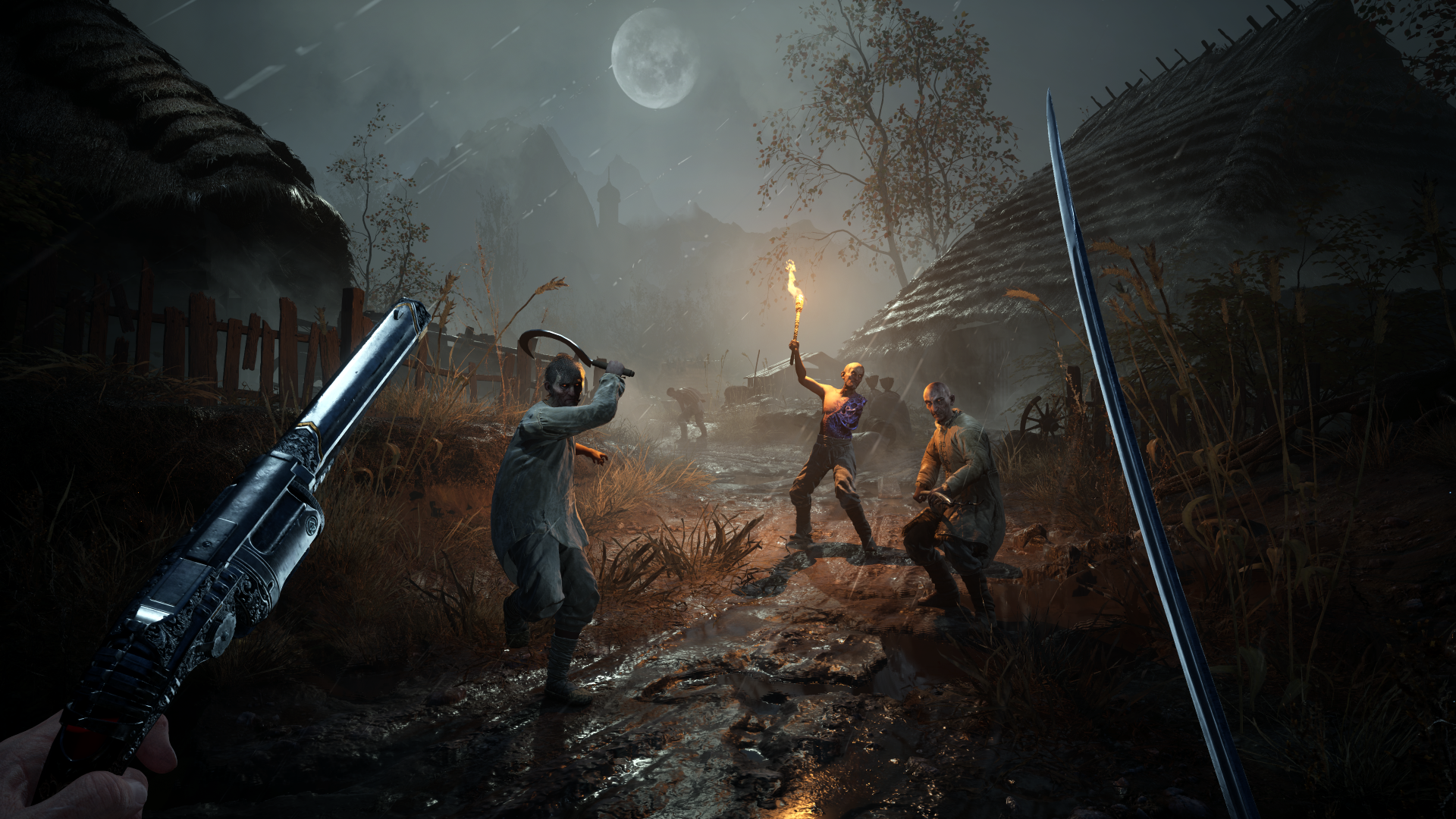
This encounter acts as a massive, Nioh-style skill check, meaning once you’ve felled him, the rest of the bosses aren’t as tough as him.
Lanterns are the game’s equivalent of bonfires. It’s here where you’ll spend your experience points to level up. Progression is handled differently in Valor Mortis, stripping away traditional stat bloat. While there are character levels, each new level acquired doesn’t increase numbers like strength or dexterity. Instead, levels grant points to unlock specific skills that actively change how you play. If you get stuck on a boss, you can go the tried-and-true route of farming kills to get more XP to level up. However, what’s kind of interesting is that there’s still a skill ceiling here. You can make things better or even easier with XP farming but you can’t raise the stats so high you just one-hit everything.
You’ll have all sorts of items like consumable health vials, stones that enhance your blade damage for a number of hits, throwing grenades, and so on. Ambers are awesome slotted gems that open up after you’ve invested enough experience points, allowing you to reduce damage from explosions, recover health when using transmutations, or even parry bullets. The game does a great job at tracking catalysts (the game’s version of souls), showing exactly how much you’re holding and cleanly displaying what’s at risk after a death.
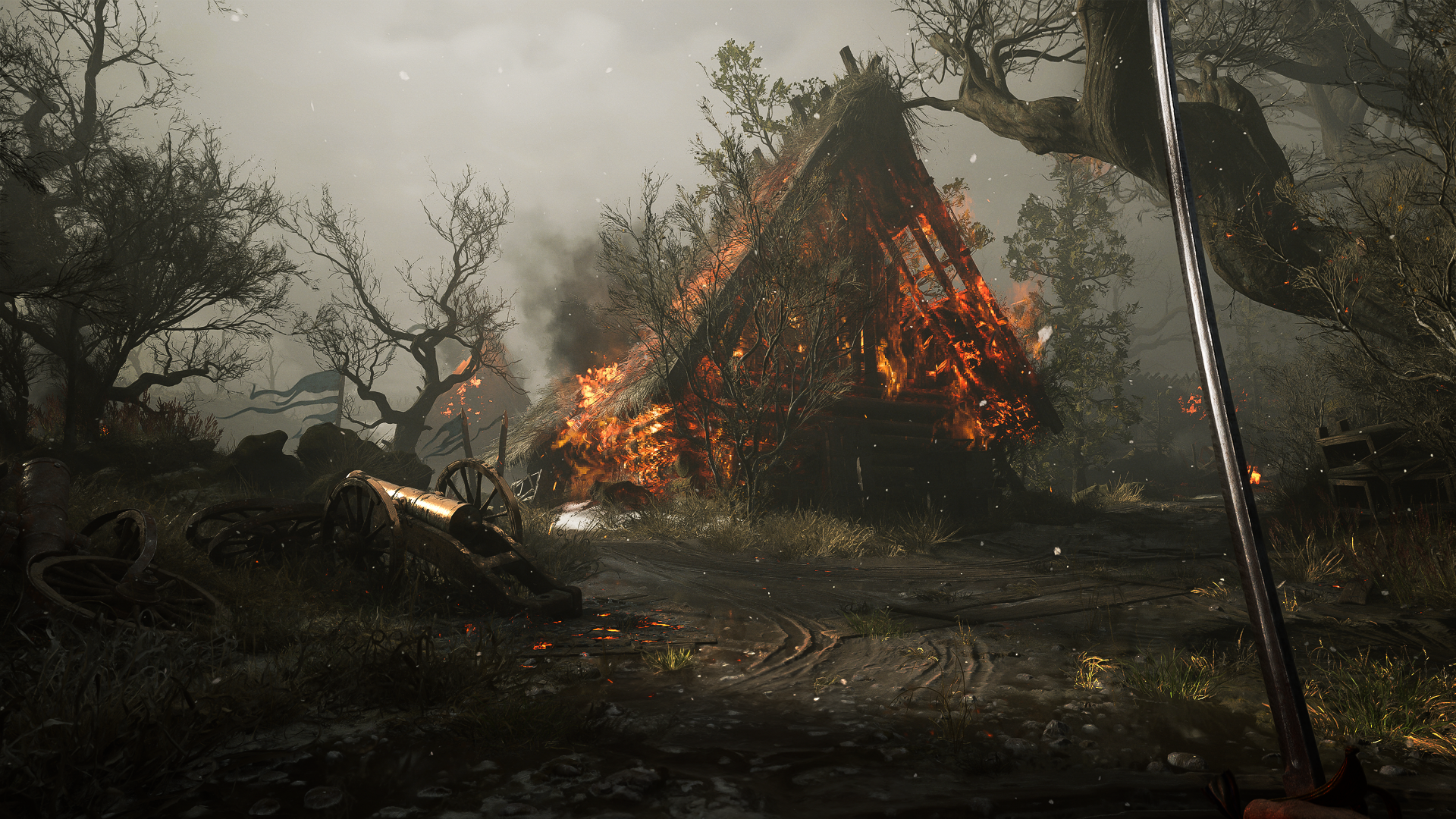
I should stop being amazed by this, but this is another Unreal Engine 5 game that runs well. I was averaging 120fps in small and large areas, which that took me by surprise. The caveat is that this performance was accomplished by using DLSS on Quality, with Frame Generation on 2X, and no ray tracing enabled. That said, the game does suffer from pop-in, mainly enemies and some objects, but texture pop-in was nearly nonexistent. Overall, I was impressed by One More Level’s overall polish that’s ready for launch.
◆Linux 7.2.9-1-cachyos
◆Intel Core i9 13900K @ 5.8GHz
◆ASUS ROG RYUJIN II 360 ARGB AIO Liquid CPU Cooler
◆G.SKILL TRIDENT Z5 6000MHZ 64GB (32×2) DDR5 RAM
◆ASUS ROG Strix GeForce RTX 4080 16GB GDDR6X
◆WD_BLACK SN850X M.2 (8 TB)
◆LG UltraGear 34GP950B-G (21:9 Ultrawide @ 3440×1440)
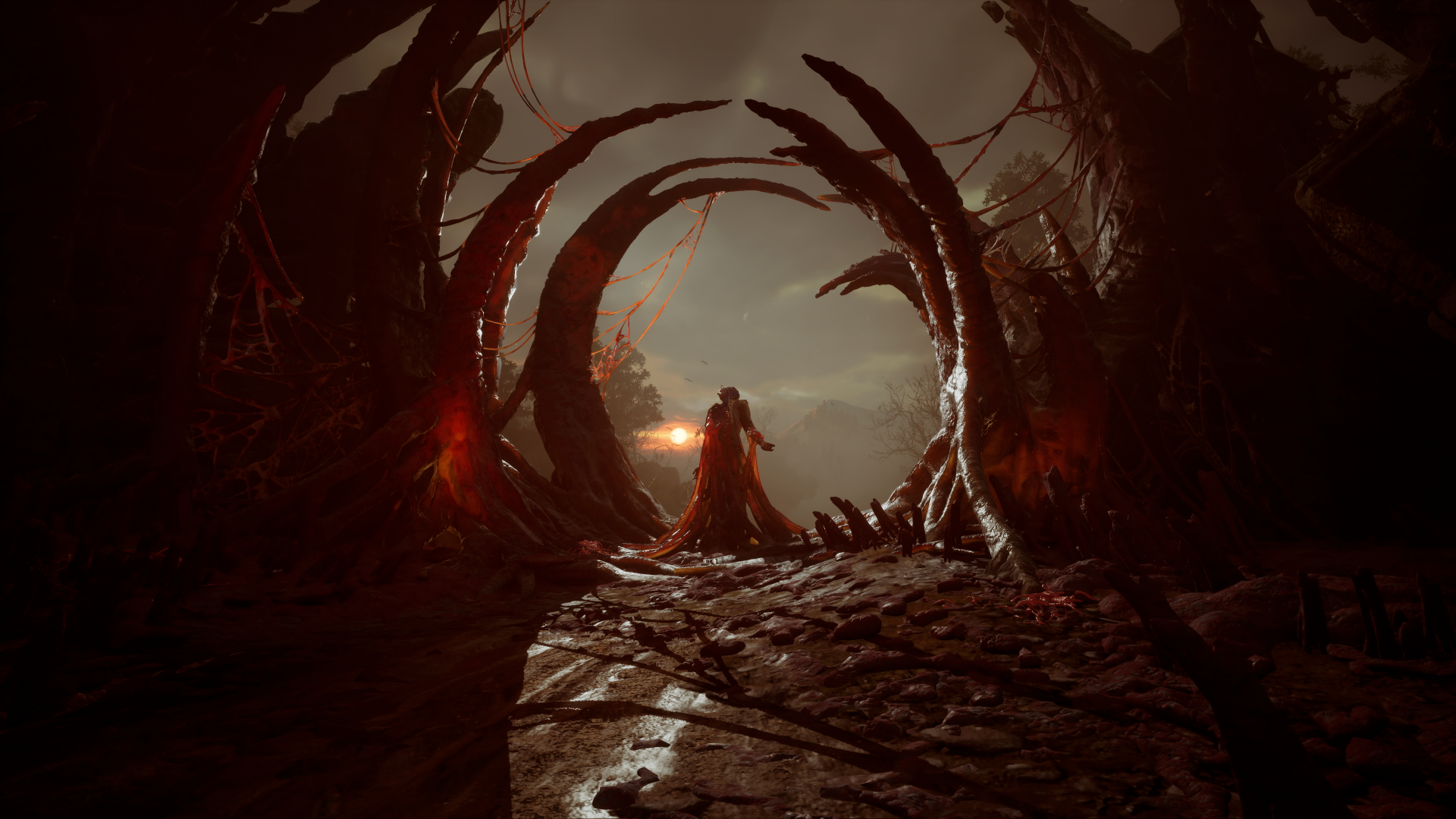
Valor Mortis translates from Latin to “the value of death,” something you’ll get to understand intimately. While hard-fought victories are incredibly cathartic, the initial difficulty spike of Lothaire might break some hardware. Yet, pushing through this 19th-century plague-filled nightmare is deeply rewarding. By shedding traditional stat-leveling in favor of meaningful skill trees, transmutation abilities, and a responsive combat system, the game carves out a distinct identity. Valor Mortis is a tight, focused action experience that successfully injects the Soulslike genre with Metroidvania DNA in revelatory ways.