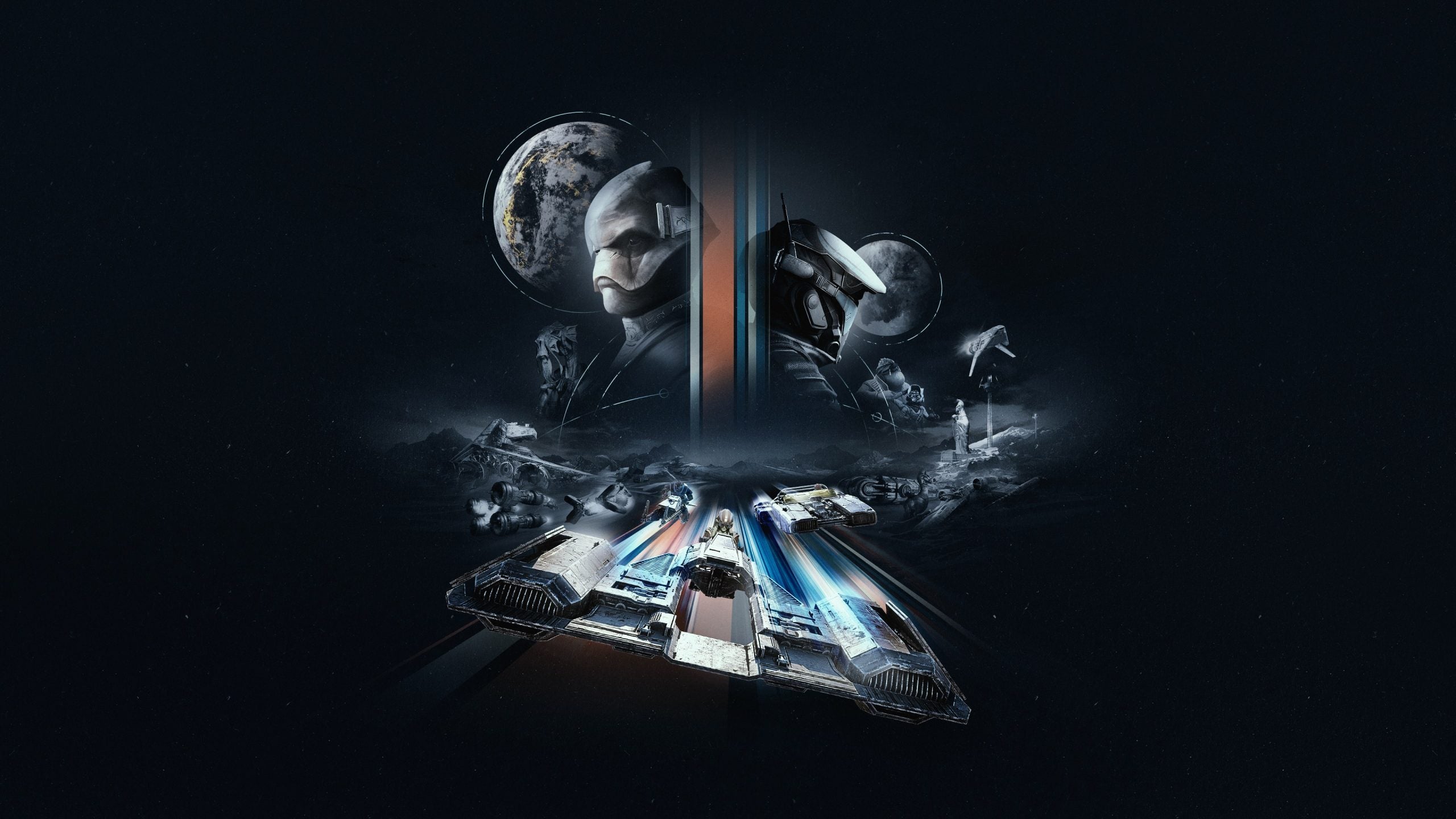
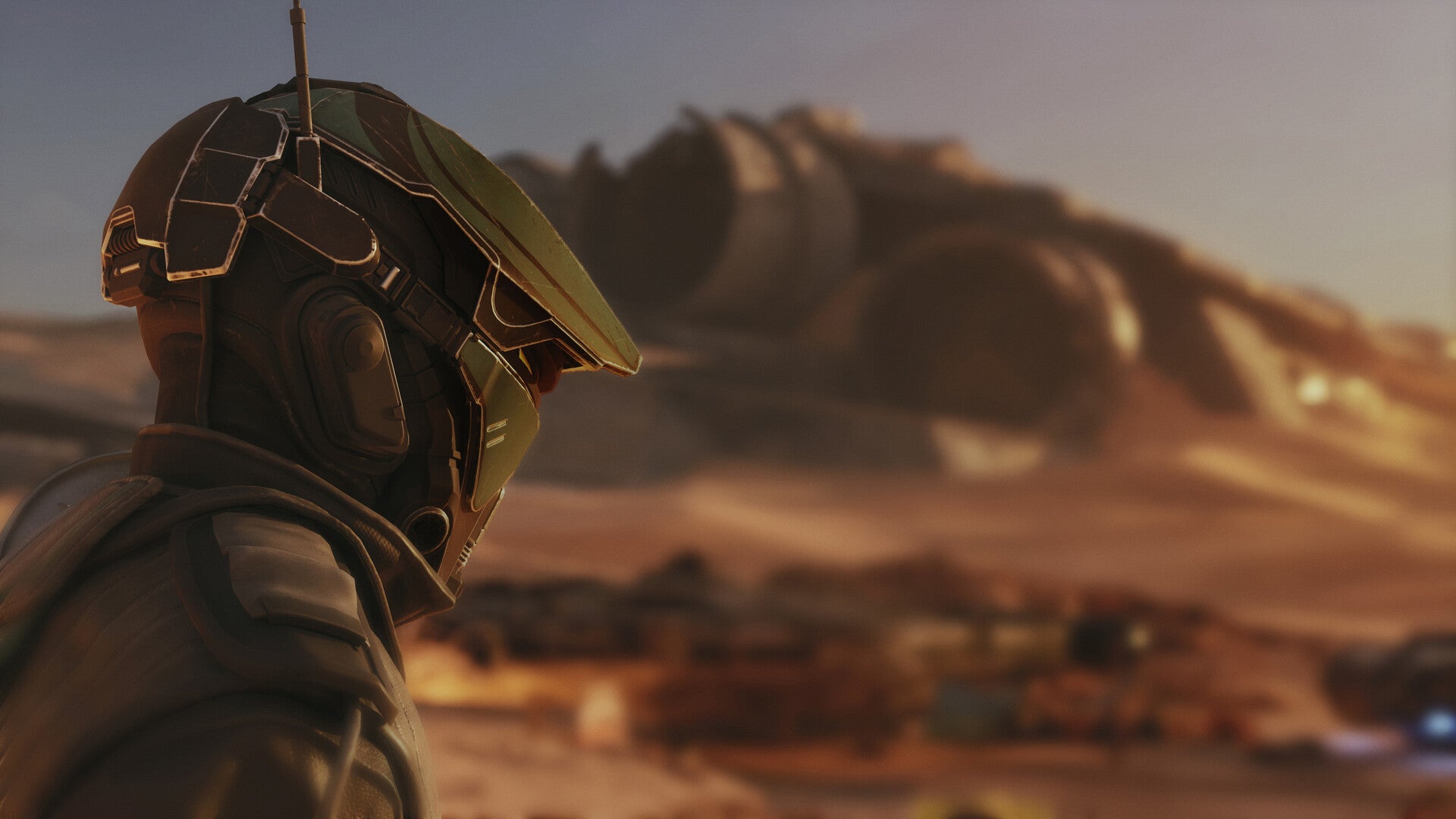
You assume the role of Shade, a masked character whose look and sound you can define, albeit with some limitations. Shade is a full character, as he or she speaks in cutscenes, and you have agency in their growth throughout your time playing the game’s many modes. My version of Shade wears green, yellow, and white, sports a default racer-style helmet, and hides his true voice with a modulator that sounds robotic and synthetic. Already, this game goes deeper and more impactful than any of the racing games that have come before it. Shade’s past is complicated, a racer who is looking to reclaim lost time and glory where there’s a clear villain to chase after, and hoping to find it racing in the Galactic League.
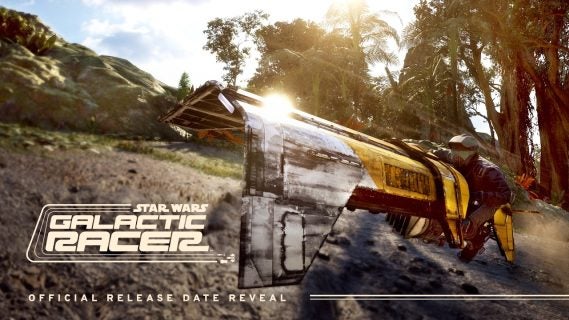
There are four vehicle classes, three of which make up the bulk of the game. These vehicles at the start feel like the Honda Civic or Golf GTI selections, and have about the same amount of speed when you enter your first races. First, there’s the landspeeder, an unlikely racing variant whose special feature is the ability to drift. Next is the speeder bike, which fans of “Return of the Jedi” and the forest moon of Endor will find familiar, featuring a kinetic boost which jolts you forward with immense speed. Of these three, the last one is my favorite, the skim speeder, capable of turning onto its side for the special feature of a knife edge, carving through tight spaces and making even tighter turns. The fourth and final vehicle class belongs to the podracer. In Galactic Racer, podracing is treated as endgame, elevating these vehicles over prior games as elite-level racing with no margin for error.
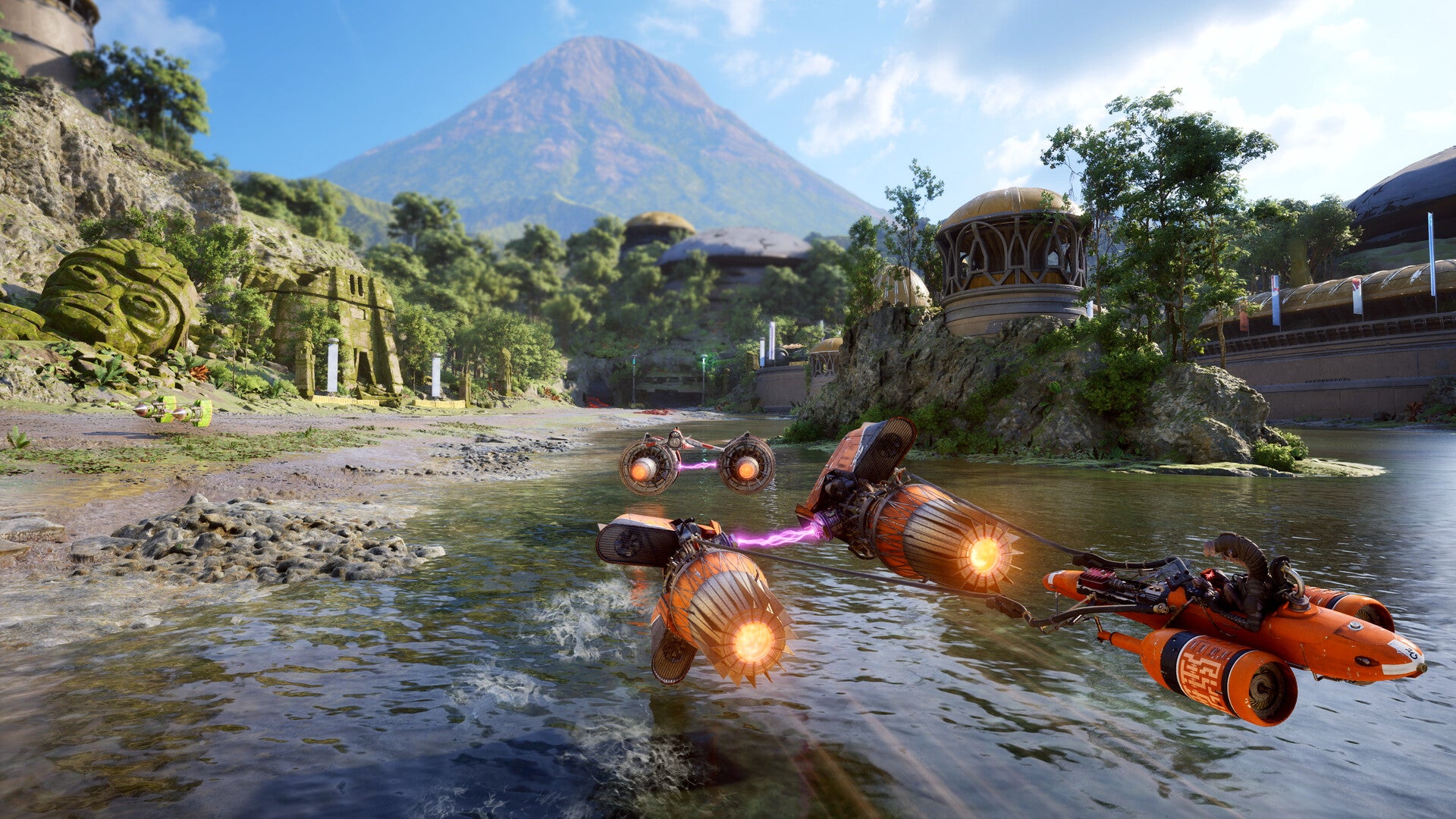
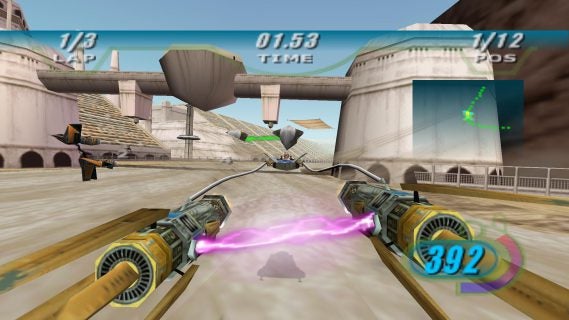
The act of racing is immediately satisfying, as before the lights go out, you’ll have to initiate the startup sequence for your racing craft. It’s always a small, repeatable quick-time event. This has bearing later in the game, but it does help immerse you into the fact you’re about to go racing. There’s even a small mini-game with the acceleration as the 3-2-1 countdown goes, to keep your throttle in a certain zone for the best off-the-line speed boost. There’s two types of propulsion systems that every vehicle class has. One is the afterburner, which allows for a short, continuous boost of speed. The second is far more dangerous and rewarding: the ramjet. At first, it felt like the ramjet was a precious commodity you should protect or conserve, but it’s actually the opposite. The ramjet is an essential and core function of Galactic Racer that you should engage with often. My favorite part is how tactile it feels: to use the ramjet, you click in the right stick to switch the propulsion system to it. Then you press the same button (in my case, ‘A’) as the afterburners to activate it. Where the danger lies, is that while it too is continuous, it generates heat. This heat builds up and over time puts you into a danger zone; if you don’t disengage it, you will blow up, losing precious time and lives. Learning how to manage the ramjet, understanding the timing when you’re overheating and hearing the alarm, is just as important as the turning, braking, and acceleration in any other racing game. The way Galactic Racer makes its systems and function feel tactile is further exemplified when another racer uses an ability that causes a malfunction: you have to perfectly time a button press to restore the system (similar to Anakin in “Star Wars: Episode I – The Phantom Menace” where he redirects fuel in his podracer). It’s never as complicated as Anakin’s systems, but having all of these mechanics under your control feels awesome without feeling overly complex. Though anyone looking for ease of use, there are accessibility options to have them done automatically for you.

In Galactic Racer, podracing is treated as endgame, elevating these vehicles over prior games as elite-level racing with no margin for error.
CAMPAIGN
The campaign plays out across three acts to see its credits, with one of four difficulties you can pick from. How long that takes, and how much effort that takes is somewhat out of your control until you get a handle of the controls, systems, and invest in long-term upgrades. You’ll have a path to select what types of races or events you’ll participate in. All routes are randomized in what you get presented with, but the order of planets have a set progression. After each race, you’ll be presented with your race winnings, and be able to select an upgrade across several categories: resilience, ramjet, afterburner, cornering, etc. What you choose will have direct impact on your playstyle and how far you can go with the decisions you’ve made. Galactic Racer doesn’t have the ability to rewind time, nor are you able to restart a race – mistakes have consequences.
You are given a single league token to participate in races; if you fail to complete an event, you lose that token, get knocked out, and have to start over. However, there is some level of persistence, as you will be able to start over in the last act you were in. For instance, I had progressed from Act I well into Act III before I got wrecked, and I was able to start over from Act III and not be reset any further. For reasons, each new act is a soft reset, so this is a great trade-off. While playing, there are ways to earn additional league tokens that can ensure you stay in the league as long as possible.
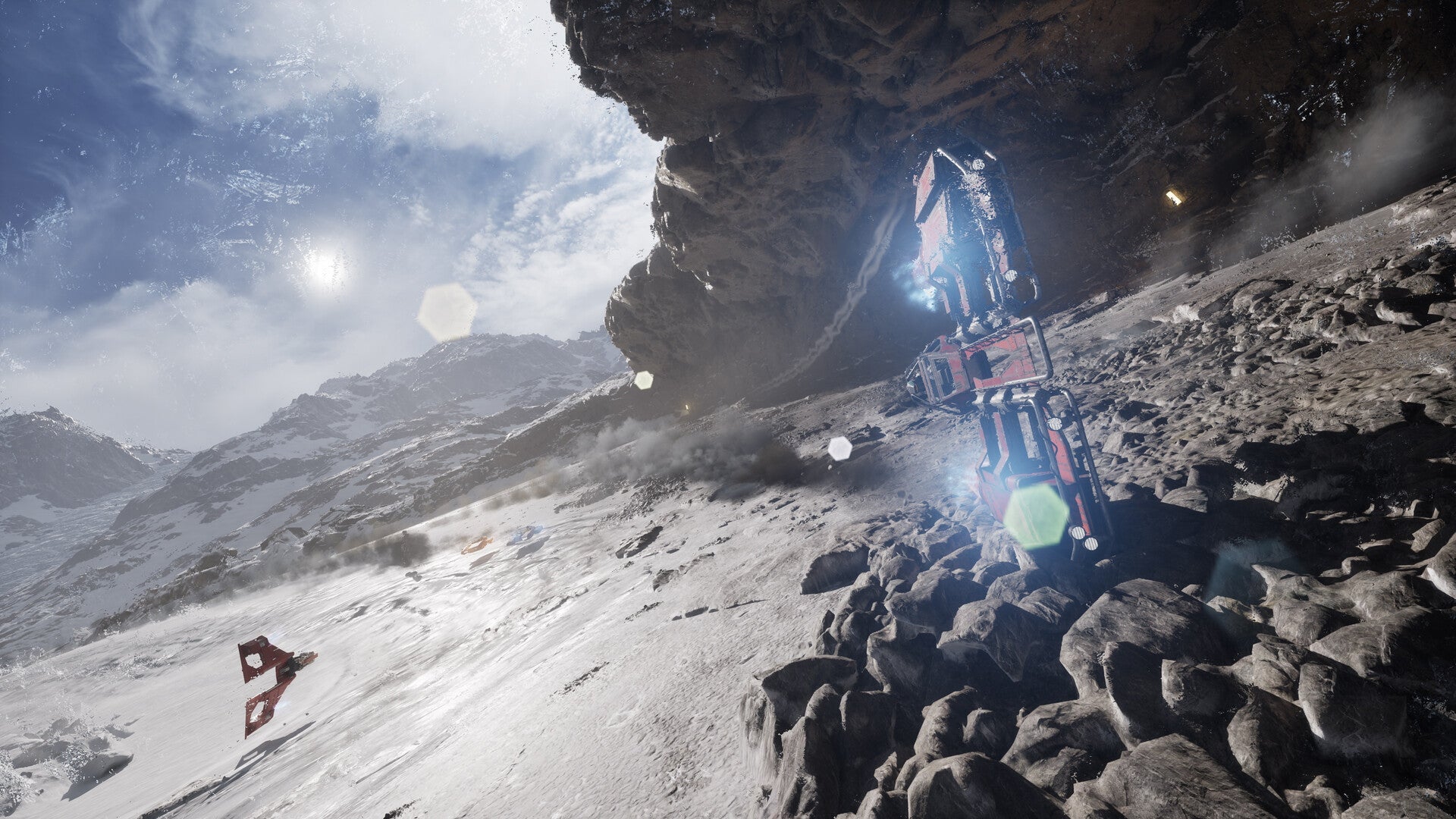
You’ll tour across seven planets: Jakku (featured in “Star Wars: Episode VII – The Force Awakens”), Lantaana – a lush forest planet, Ando Prime (shown in a hologram in STAR WARS Zero Company) – a frozen tundra, Sentinel One – a toxic planet not unlike our own Venus, Derven Acos – a moon that manages to have all biomes and hazards in one, Crait (featured in “Star Wars: Episode VIII – The Last Jedi”), and Tatooine (of course we know what this one’s about). I was initially bothered by some of the planets’ hazards, like: ice, lava, and toxicity. In time, the reality is that these hazards are easy to avoid or something you can manage. When you arrive at each new planet, you’ll be able to walk around the paddock in a tight over-the-shoulder third-person view to buy upgrades, converse with the other racers, or take on unique opportunities and sponsorships. There’s also plenty of surprises to be found, and unlikely alliances to form. You’ll often be presented with a deal, where you can choose to get more credits over upgrades, or more upgrades over credits, or simply declining that deal altogether.
In general, I don’t find combat racers all that enjoyable, but thankfully this isn’t one of them. Sure there are abilities that are either offensive or defensive in their design, but there are no pick-ups, nor do the abilities recharge at an expedient rate. The pedigree of the people at Fuse Games is a stark reminder, as the way you can ram racers into objects or off-track and get the slow-mo camera when they or you crash is very much that Criterion flavor you’d see in a Burnout game. This is all to say that everything is so thoughtful and meticulously designed. All of the systems work so well together, both in single and multiplayer.

Galactic Racer doesn’t have the ability to rewind time, nor are you able to restart a race – mistakes have consequences.

SCENARIOS
This is a character-focused mode where there’s longer-form challenges to complete a series of races. The game tracks how many “clears” you have for a particular scenario. Some character scenarios will be locked, and to unlock them you’ll have to acquire their racer style in the campaign to then have them unlocked for scenarios. This is a great mode that forces you to use a variety of vehicles, adhering to the run-based structure, but giving you exposure to all of the different locations and vehicles in rapid succession.
ARCADE
This is essentially time trials where you’re racing against the clock for the fastest times, and there’s no opponents on the track to disrupt it. Over the years I’ve grown to enjoy time trials more and more, and it’s wholly gratifying to not only beat par times, but besting friends’ times in the leaderboards. It’s a simple mode, but one great for practicing and really understanding a vehicle’s quirks.
MULTIPLAYER
The final mode might just be its best. Up to 12 players can battle it out across various modes to include quickrace and quick podrace. But the multiplayer’s cup of blue milk is its tours. Multiplayer Tour is the first one you’ll have access to, and it maintains the structure of how all other races go in the single-player modes. After reaching level five, Podracing Tour unlocks for some serious stakes and fast-paced racing with that same structure for 8 players. This mode has its own progression, with some really substantial unlocks. Along the way, new players can join the tour at any time during the series, and after each race you can place bets on where you’ll finish to net some extra credits. The multiplayer is exciting, tense, and really competitive in ways I’m normally not. This is a mode I will be eager to return to.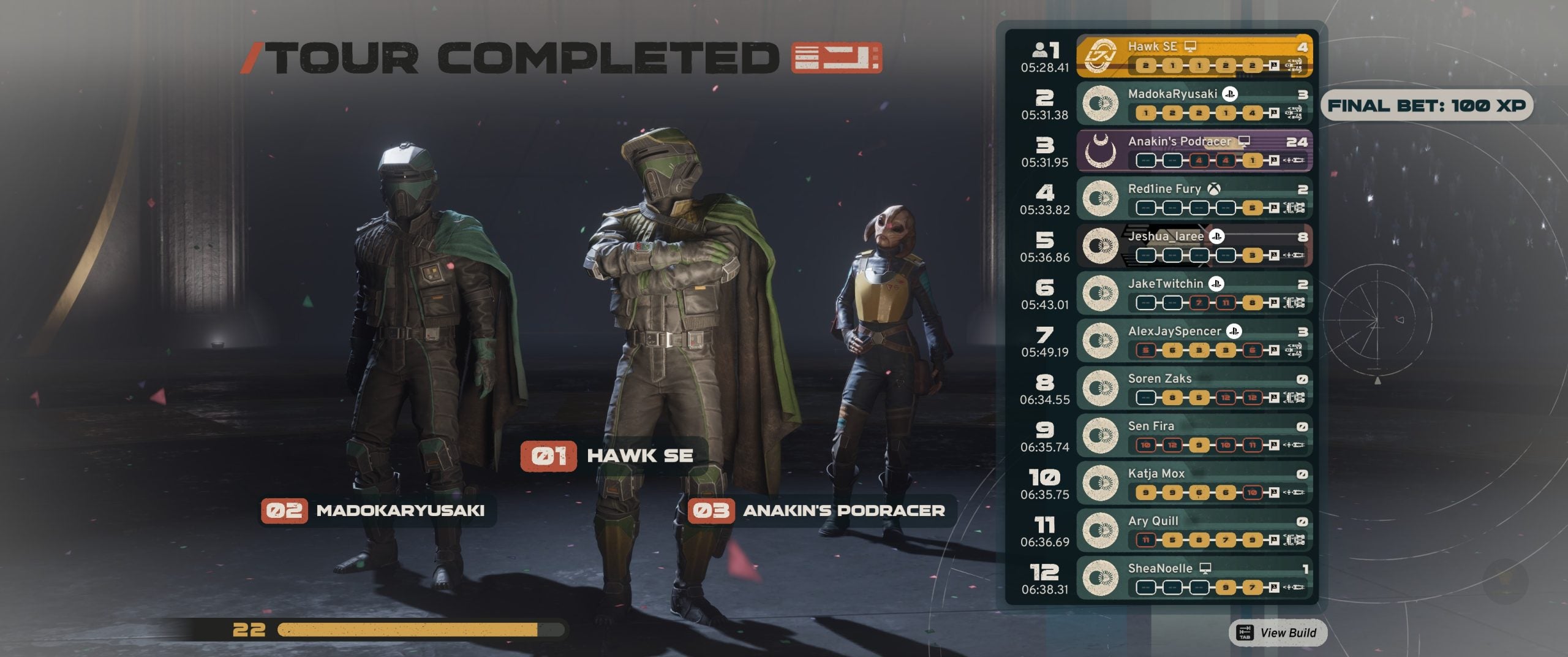
Upgrades are something that is an element of every mode you will need to understand which ones to invest in, and what not to, especially when you want to cater to your chosen vehicle’s strengths. I did find that swapping between game modes and vehicles can be disorienting, as upgrades applied in my campaign were vastly different than when playing a scenario, leading to mistakes. There are so many categories to upgrade your vehicle, you won’t be able to maximize all of them. During any mode of play, you can hold a maximum of four parts, but can swap them up or replace ones with upgraded versions. You can have up to four abilities to bring into a race, with things like venting to quickly cool off to keep the ramjet going longer, or venting heat towards enemies to damage them. There are fourteen racers to unlock, each with their own style that you’ll find ones that cater to your playstyle.
When racing, it’s all complemented by Gordy Haab, who has composed for Star Wars: Jedi Survivor, Star Wars: Squadrons, and more. The score is bombastic just when you’re transitioning planet to planet, but when things are tense on-track, the music swells with such precision. The score seamlessly blends into the things you’re doing, but you’d be missing it if it wasn’t there. Now, if there’s one bad thing I can say about the game, it’s that it lacks a quick race option. Meaning, there’s no way to load the game, pick a vehicle, a track, and just go racing.
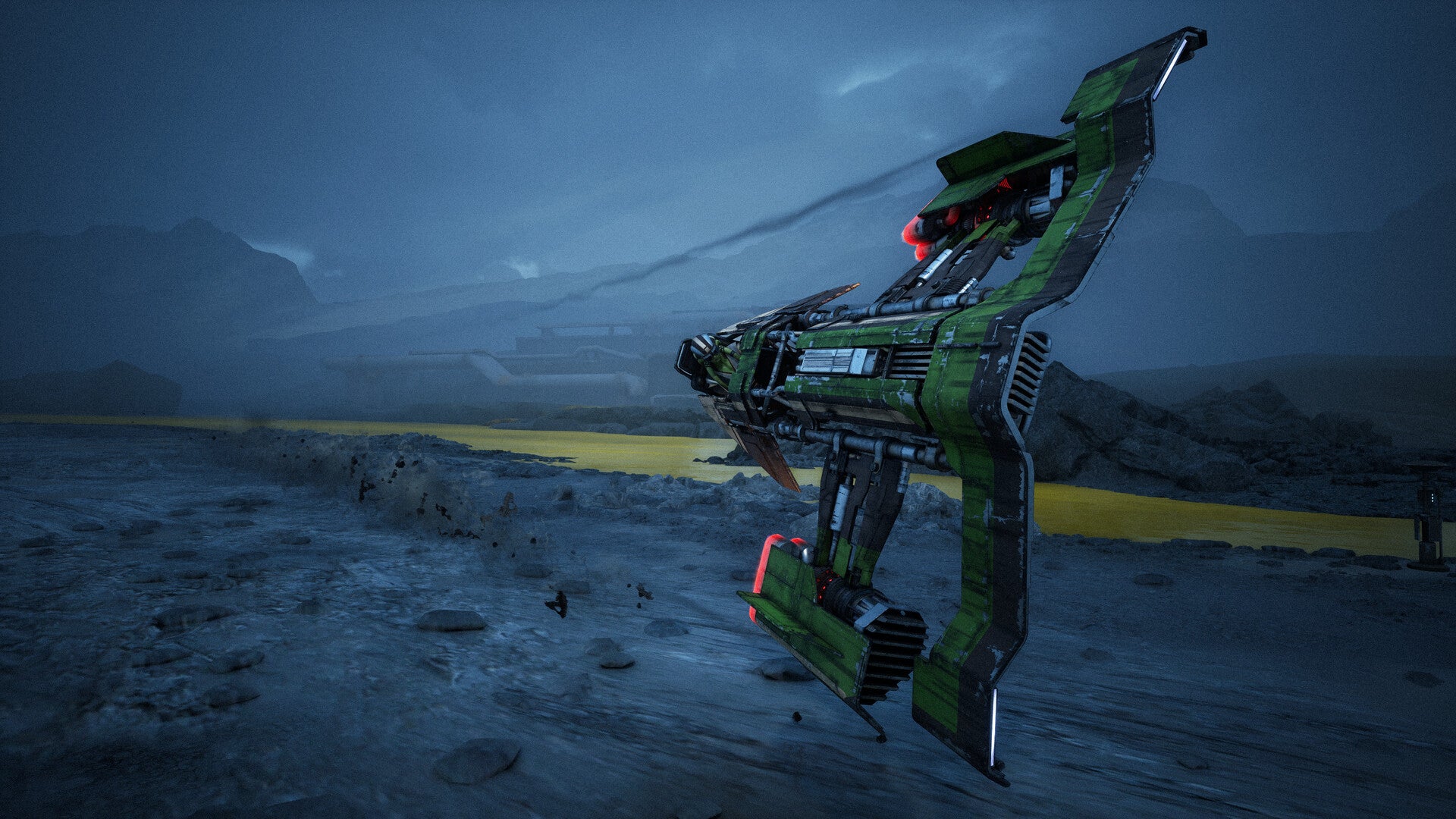
Running on Unreal Engine 5, STAR WARS: Galactic Racer is one of the most optimized games running on this engine, and performs superbly. I ran the game in 1440p and had DLSS set to Quality, though I had disabled Ray Reconstruction, and was able to get the game to average 130fps across multiple planets, track conditions, and other racers on-screen.
◆Linux 7.2.8-1-cachyos
◆Intel Core i9 13900K @ 5.8GHz
◆ASUS ROG RYUJIN II 360 ARGB AIO Liquid CPU Cooler
◆G.SKILL TRIDENT Z5 6000MHZ 64GB (32×2) DDR5 RAM
◆ASUS ROG Strix GeForce RTX 4080 16GB GDDR6X
◆WD_BLACK SN850X M.2 (8 TB)
◆LG UltraGear 34GP950B-G (21:9 Ultrawide @ 3440×1440)
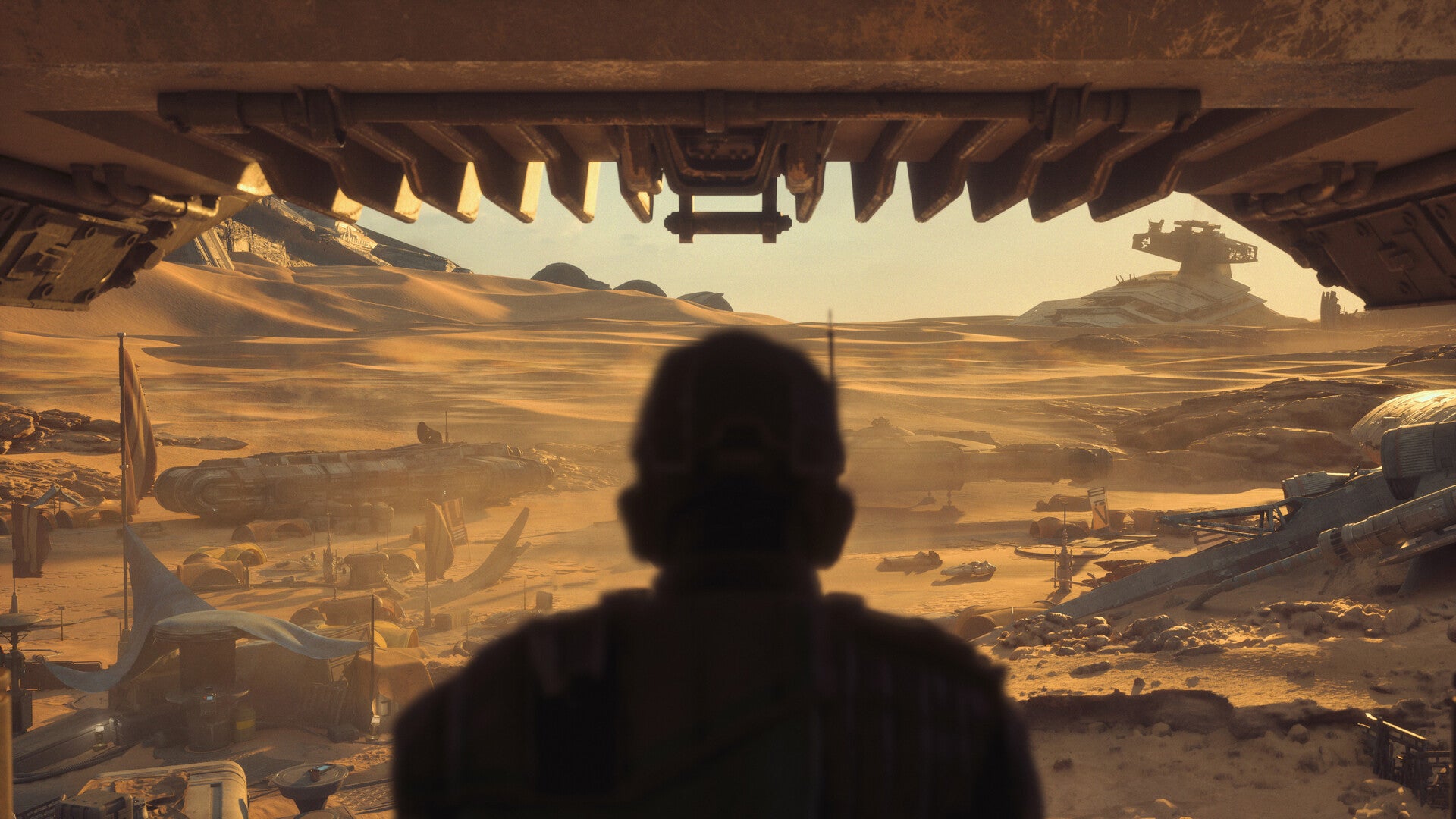
STAR WARS: Galactic Racer doesn’t just respect the legacy of its forebears, it takes the baton and runs with it much further than I ever anticipated. By committing to a high-stakes, run-based structure, Fuse Games has injected a level of white-knuckle tension that is completely unmatched in the genre. They possess an innate understanding of both the visceral thrill of arcade racing and the rich lore of the STAR WARS universe, flawlessly blending them into an essential, tactile experience. With its pristine performance, breathtaking sense of speed, and masterful risk-reward mechanics, STAR WARS: Galactic Racer is a stellar and exemplary modern classic.
Related