
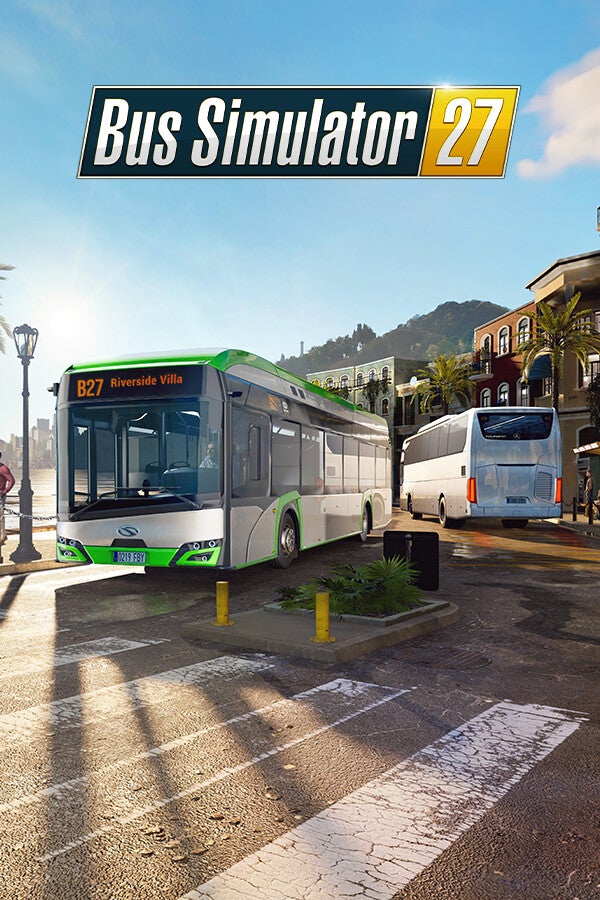

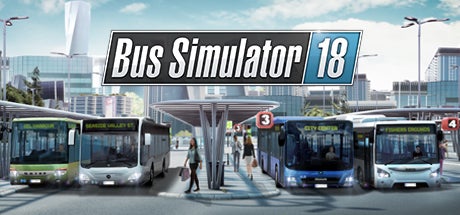


For a franchise that puts years in its titles, it’s striking how much time passes between releases, especially considering the only entries predating this one are Bus Simulator 18 and Bus Simulator 21 Next Stop. Bus Simulator 27 marks the series’ third major outing, yet meaningful iteration is nowhere to be found. A solid driving model and occasionally impressive visuals aside, very little works in its favor. After spending hours wrestling with clunky interfaces, frustrating onboarding, and overly complex gameplay loops, this stands out as one of the more disappointing entries in job simulation – this is one you should avoid.
Editor's Note:This review was written and completed before the release of Hotfix 1.15 on September 17, 2026
First impressions are everything, and Bus Simulator 27 is oddly hostile in its opening hours. A good simulation game about public transportation understands pacing as it puts you in the driver’s seat, lets you feel out the physics, introduces basic route navigation, and then slowly layers on company management as you build your empire. Here the game insists on overwhelming you with way too much information and tasking you with buying three buses and hiring three drivers- why? Then after that, it forces you to create a line (bus route), again, WHY? It seems to make assumptions you’ve done this all before, or they don’t have the time to teach you things over time. It’s really off-putting, even as a “returning” player. The kicker is that I chose Story mode, which should be the most hand-holding and better paced mode.
Bus Simulator 27 comes from Simteract, the developers of Taxi Life: A City Driving Simulator and Train Life: A Railway Simulator, neither of which reviewed particularly well. The lack of polish shows immediately: the character creator is lacking for a 2026 release, and the UX is a massive step backward. Gone is the intuitive radial menu from prior entries, replaced by a rigid, column-driven interface. Instead of quickly selecting what you need, you’re stuck making multiple clicks down nested submenus for basic actions. The new developer clearly faced an uphill battle by starting from scratch, but not inheriting the UI successes of previous games is a big step back.
Bus Simulator 27 takes place in the fictional European region of Felicia Bay. It’s a sizable map featuring notable points of interest like Fishermen’s Wharf (not to be confused with San Francisco’s Fisherman’s Wharf). Utilizing the map effectively means constructing congestion-free, punctual routes that keep your patrons happy and your transit business booming.
The game offers multiple ways to play: Story Mode serves up a guided experience with structured challenges to overcome. If cutscenes and chatty NPCs aren’t your thing, a traditional Career Mode lets you focus strictly on the business side of managing a fleet. Finally, Sandbox Mode unlocks everything so you can play freely, though it disables achievements from unlocking. You can also customize your difficulty settings and choose whether you want the game’s color palette to be vibrant and saturated or more muted and realistic.
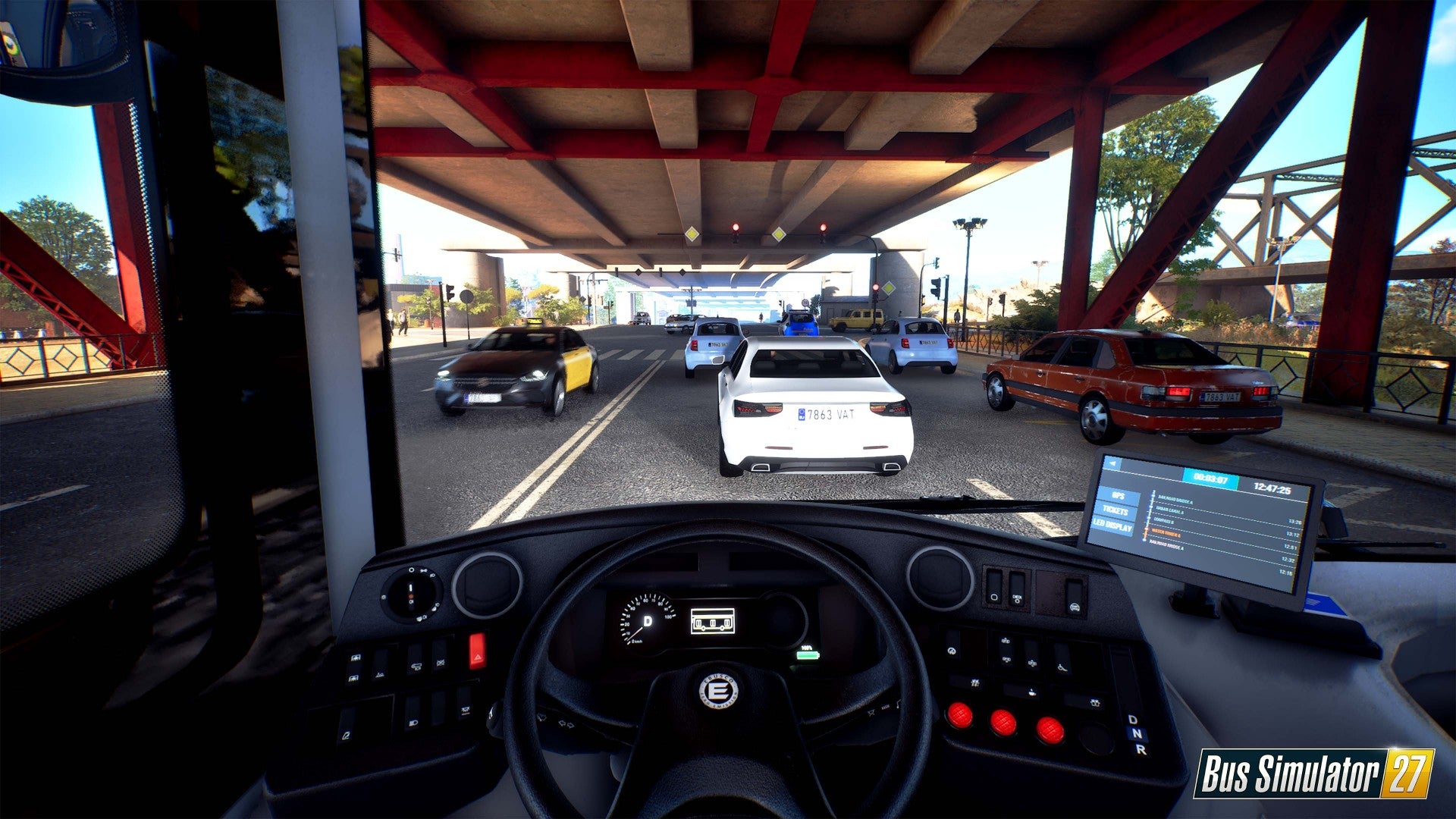
his isn’t an annualized franchise, so how so much time could pass only to deliver a game so devoid of meaningful iteration is baffling. The core driving physics feel almost identical to the previous game, and in some respects, worse. Buses feel light, floating across the asphalt without a real sense of weight, momentum, or tire grip. The passenger interactions, ticket selling, and ticket checking remain the exact same repetitive mini-games that feel more like a chore than a job function.
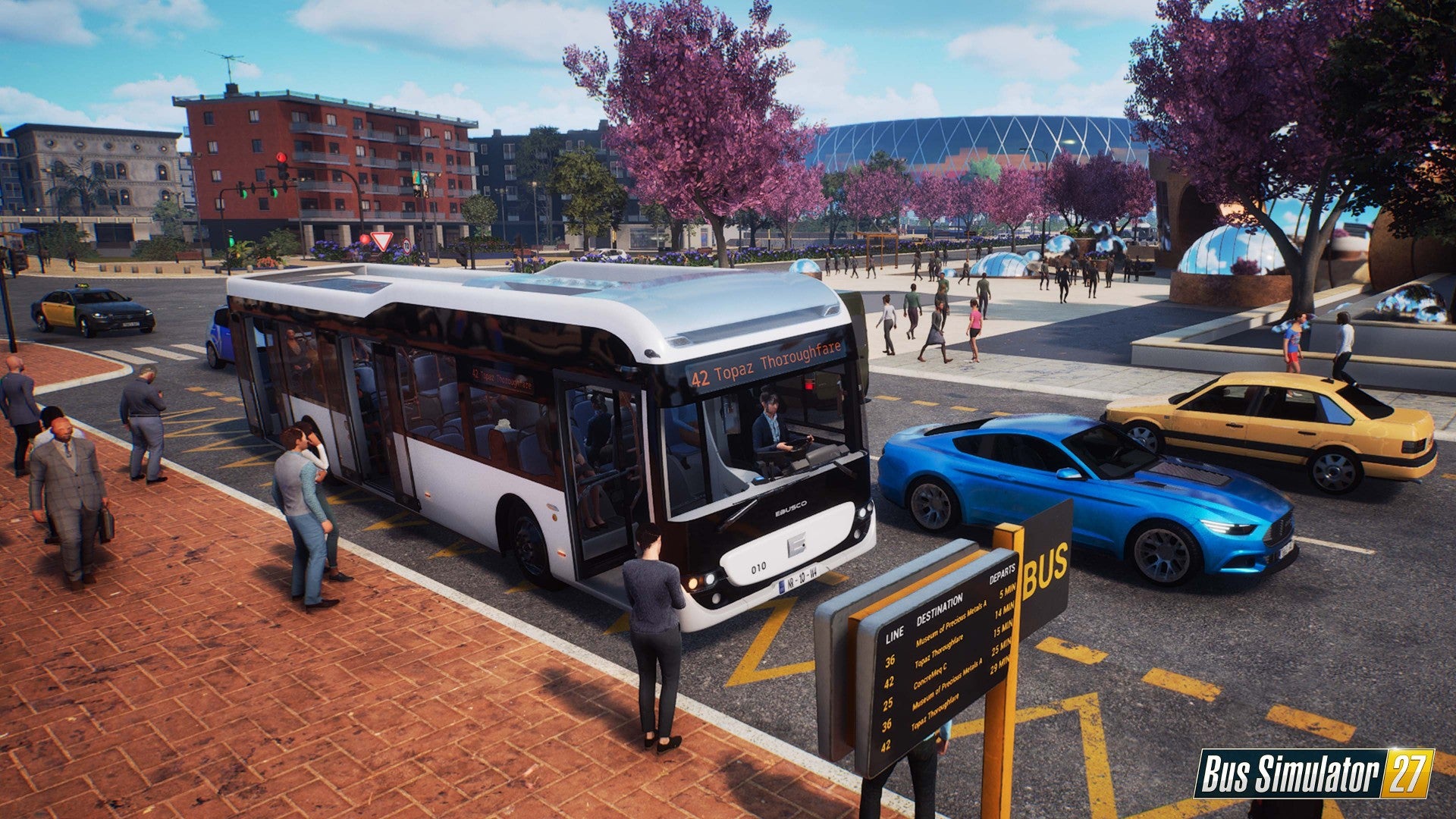
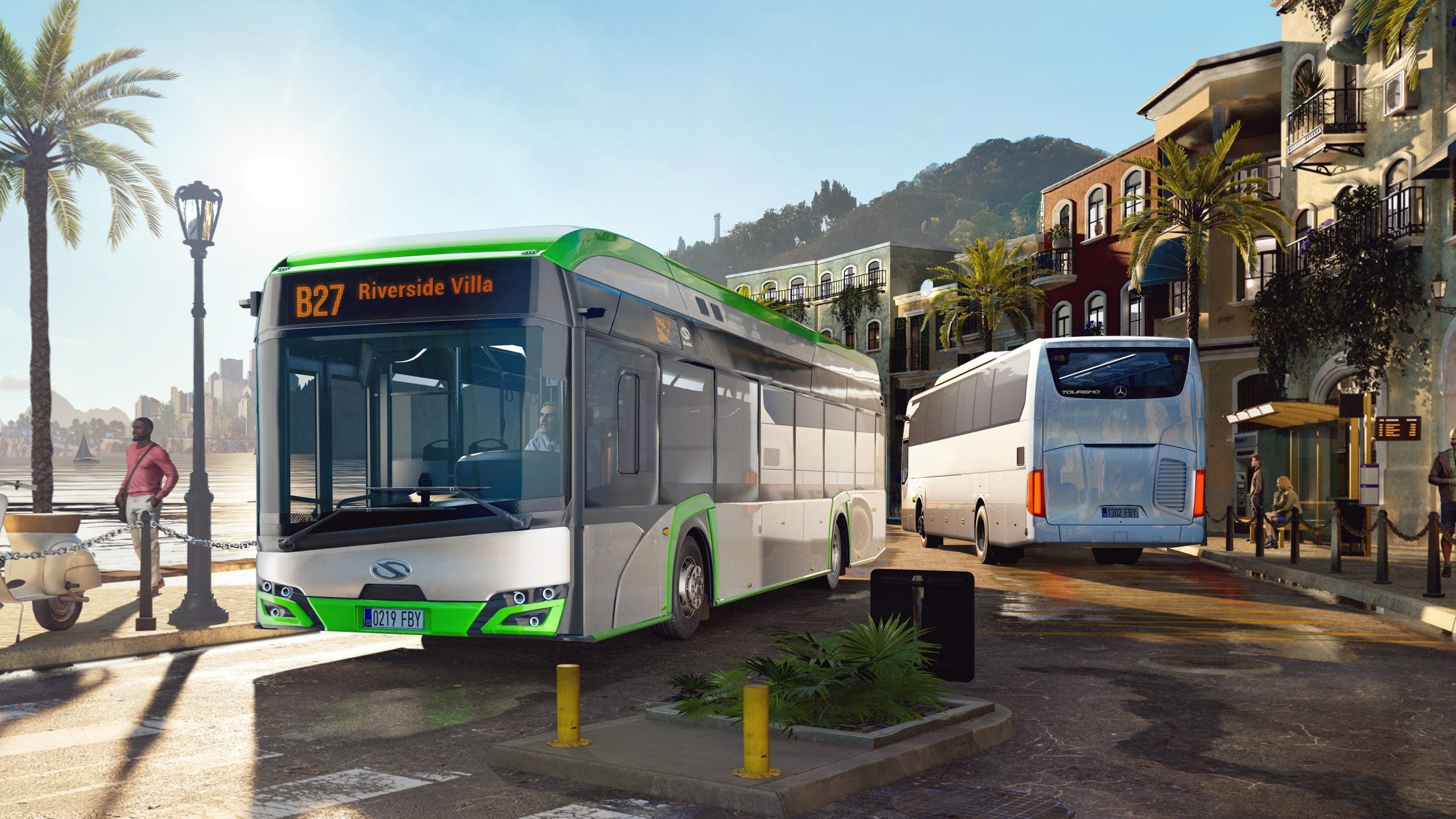
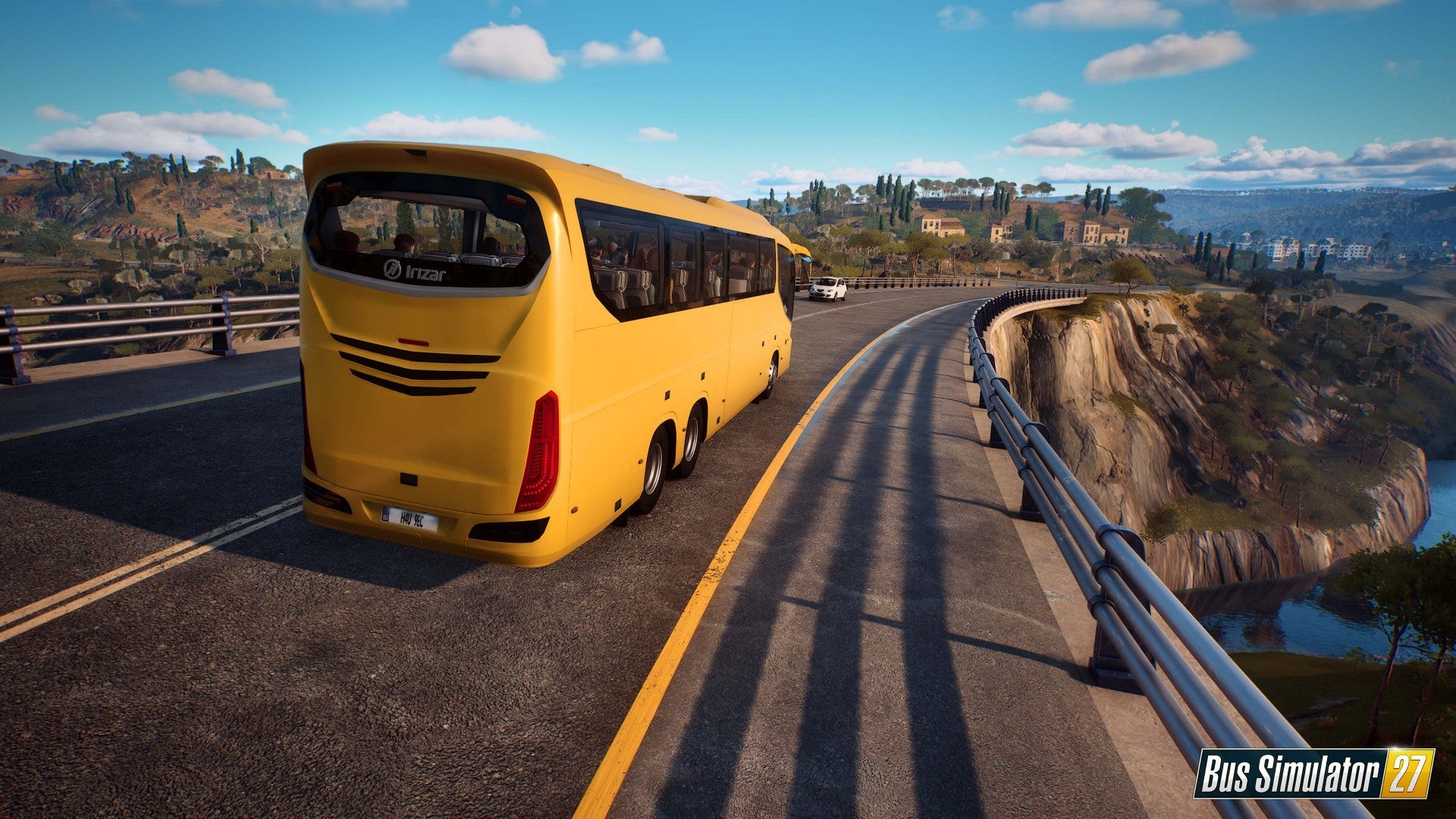
It’s not all doom and gloom; the game does get a few things right. There’s a healthy roster of officially licensed vehicles from manufacturers like MAN, Mercedes-Benz, Scania, IVECO, and Volvo. The inclusion of 4-player co-op with crossplay support is impressive and very welcome. The new coach buses introduce long-distance highway driving, providing a nice change of pace from the tight urban streets the series is known for. Additionally, driver profiles have been enhanced with skill trees, brand point unlocks, and deeper route customization, adding solid structure for management fans.
Unfortunately, during my time on the road, I constantly ran into severe AI issues. Traffic routinely froze at intersections, crashed randomly, or failed to yield. Pedestrians frequently clipped through buses or spawned directly in crosswalks, triggering instant, unfair collision penalties. The game also regularly docked points for improper indicator usage or unprovoked traffic accidents caused entirely by broken AI behavior.
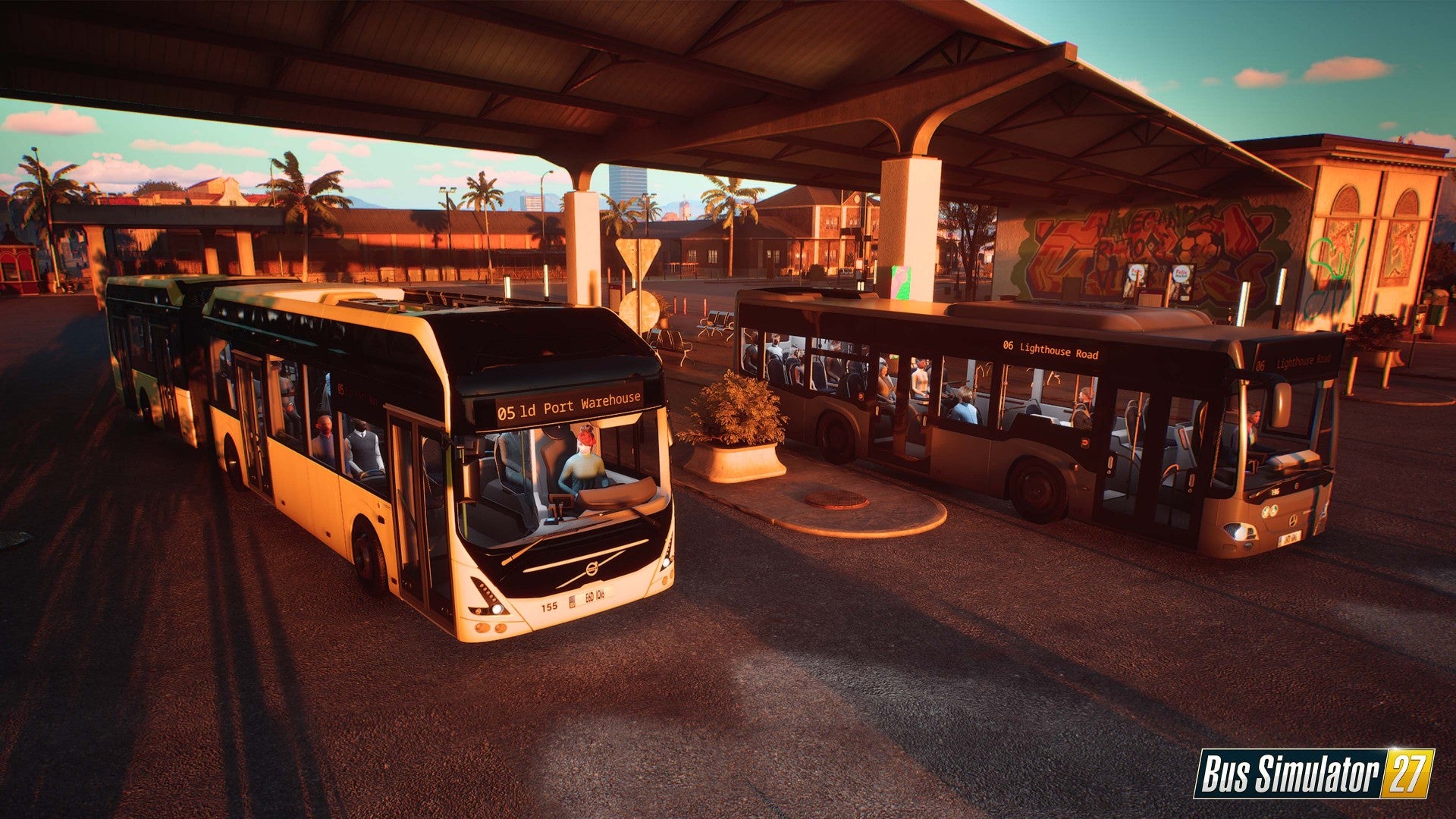
I was able to put every graphical setting on Epic, enabled DLSS and set that to Quality, alongside enabling Frame Generation. With those settings, this Unreal Engine 5 game was able to achieve an average of 100fps rather consistently across different areas of the city and surrounding area. Overall, the visuals are surprisingly strong, provided you’ve got the hardware to achieve it.
Scott's PC Specs:
Linux 7.2.5-1-cachyosIntel Core i9 13900K @ 5.8GHzASUS ROG RYUJIN II 360 ARGB AIO Liquid CPU CoolerG.SKILL TRIDENT Z5 6000MHZ 64GB (32×2) DDR5 RAMASUS ROG Strix GeForce RTX 4080 16GB GDDR6XWD_BLACK SN850X M.2 (8 TB)LG UltraGear 34GP950B-G (21:9 Ultrawide @ 3440×1440)
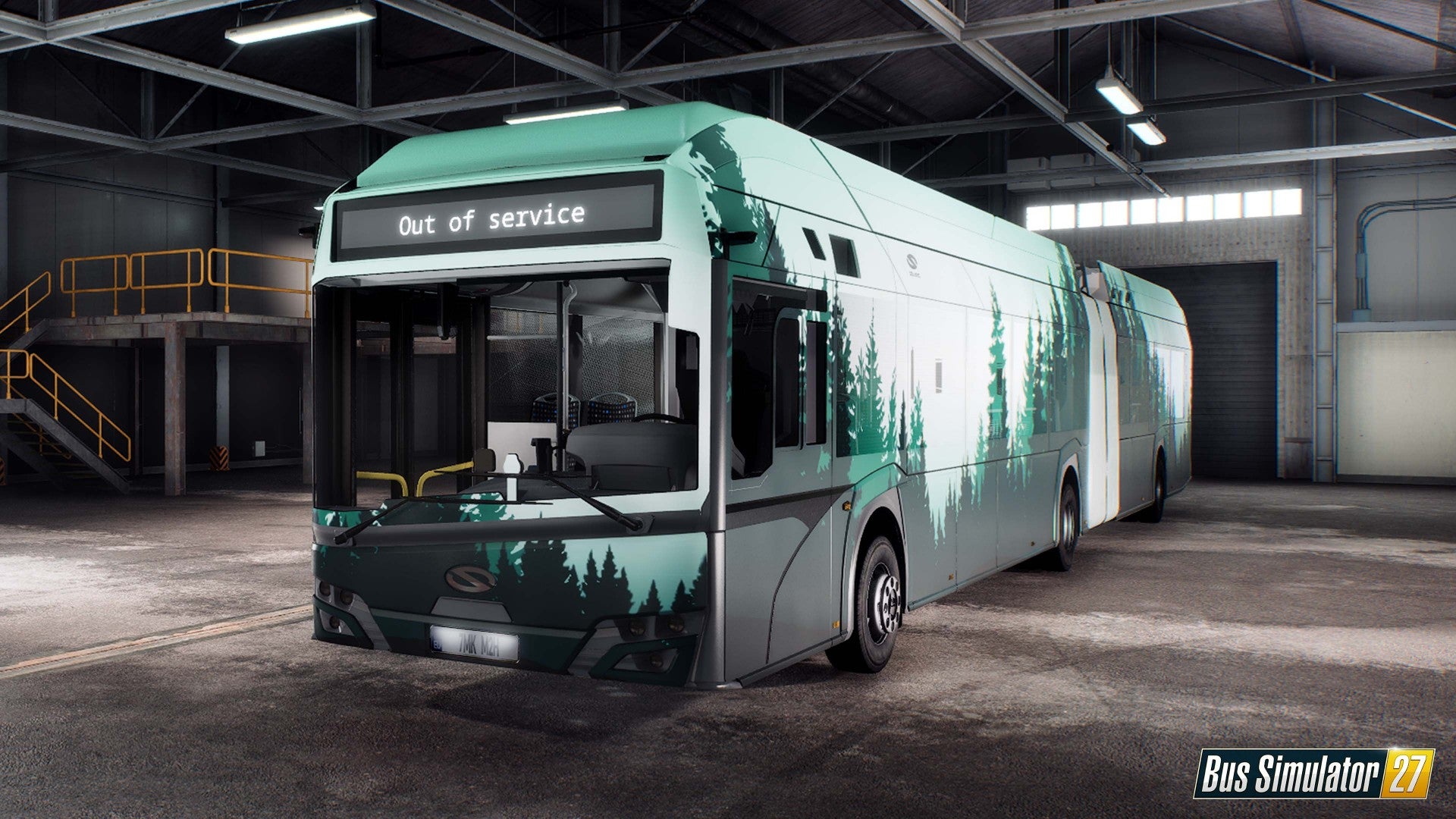
Bus Simulator 27 feels stagnant and lacking in innovation and iteration. Something like this might be forgivable in an annual series, but with six years since the last game, that can’t be pardoned. Simteract burdens new and returning players alike with an overwhelming, poorly designed wall of onboarding tasks up-front, and plenty of bugs to demonstrate that this wasn’t ready for release. If you are a bus simulation enthusiast who wants to drive licensed coach buses through an interesting map with friends, you might find some enjoyment here down the road. But for anyone expecting a true evolution of the franchise, this isn’t it. Now, a bus simulator actually worth playing is the far superior Bus Bound – made by the previous developers, stillalive studios.