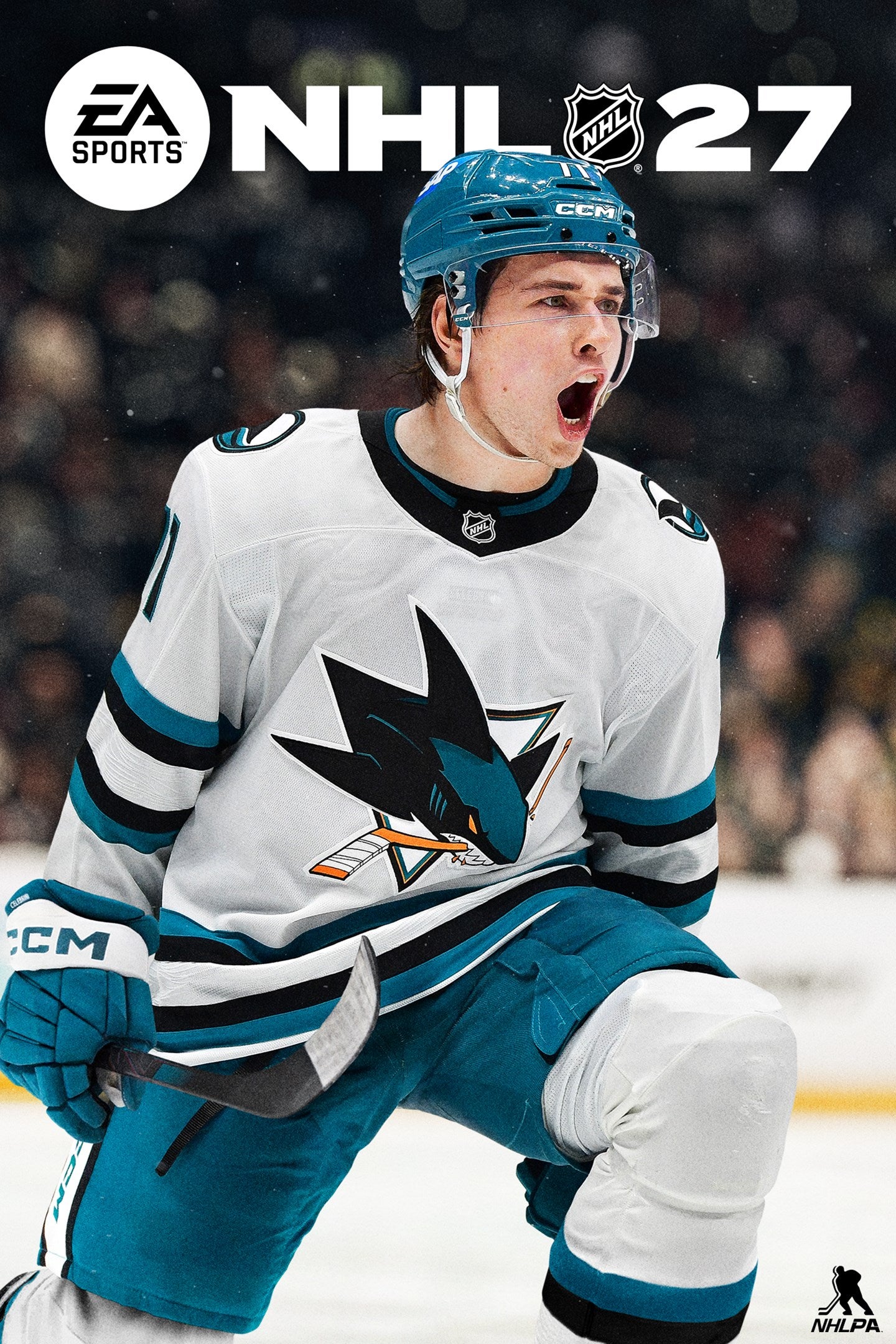
Even well into my thirties, launch week for an EA Sports NHL title still carries a specific kind of weight. A lot of that comes down to ritual: it’s the one series where my core friend group reliably sinks 100-plus hours together every single year. So when EA announced the long-awaited return of Connected Franchise this past summer, a feature the community has begged for since the mid-2010s, it felt like NHL 27 might finally break the cycle.
After spending roughly 20 hours with the retail build, the verdict is familiar. NHL 27 lays promising groundwork for the future, but at a steep $89.99 CAD price tag, it is increasingly difficult to swallow paying full freight for what still feels like an extended proof of concept.
Connected Franchise: A Welcome Comeback
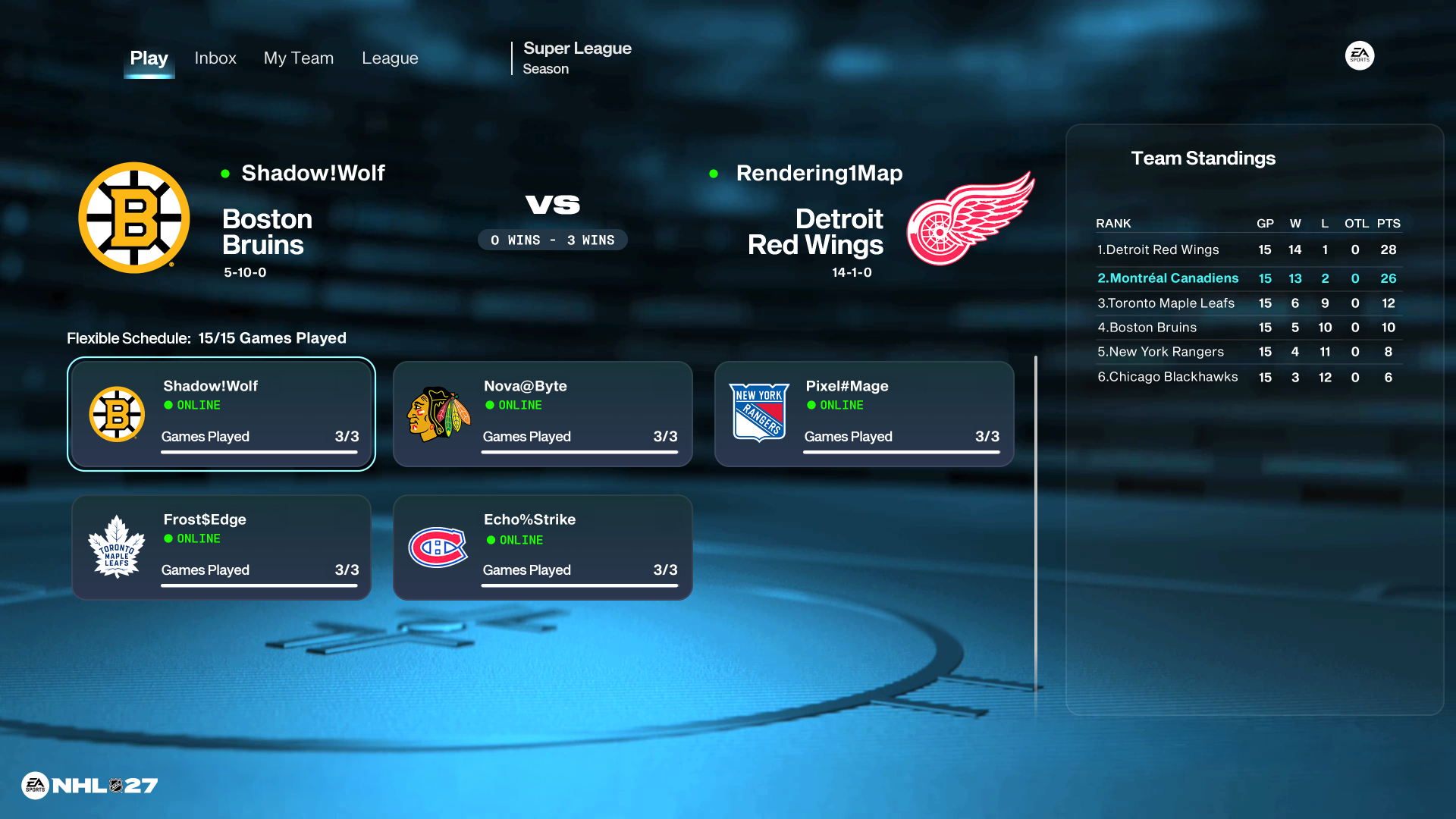
Let’s start with the headline feature. Bringing back Connected Franchise after a decade-long hiatus is objectively welcome, but the execution exposes immediate limitations.
You can configure a league with anywhere from 3 to 32 human-controlled teams. The fatal catch? Every single team in the league must be controlled by an active user. Unless you can routinely wrangle 31 committed friends to run a full 32-team schedule, you cannot play a standard NHL season. What the mode desperately needs is straightforward: let us set how many users are involved, and have the CPU handle the remaining teams. Without that basic toggling, running a believable, full-slate league with a small group of friends is completely off the table.
Day-to-day league management lets you tweak rosters, execute trades with active user teams, and bid on free agents. Custom rosters are supported, which is critical, because the mode lacks an entry draft, player progression, and year-over-year stat tracking. Diehards will have to do the heavy lifting manually if they want multi-season continuity. EA has hinted that deeper systems could come in future editions, but for this year’s release, this is all we get.
The blueprint for getting this right already exists within EA’s own walls. Madden has demonstrated for years that you simply port the depth of the offline Franchise suite online, complete with progression, scouting, drafts, and CPU logic, and let human players take the reins of their chosen clubs. While having Connected Franchise back on the menu is worth acknowledging, this bare-bones iteration isn’t the mode the community spent ten years asking for.
Presentation
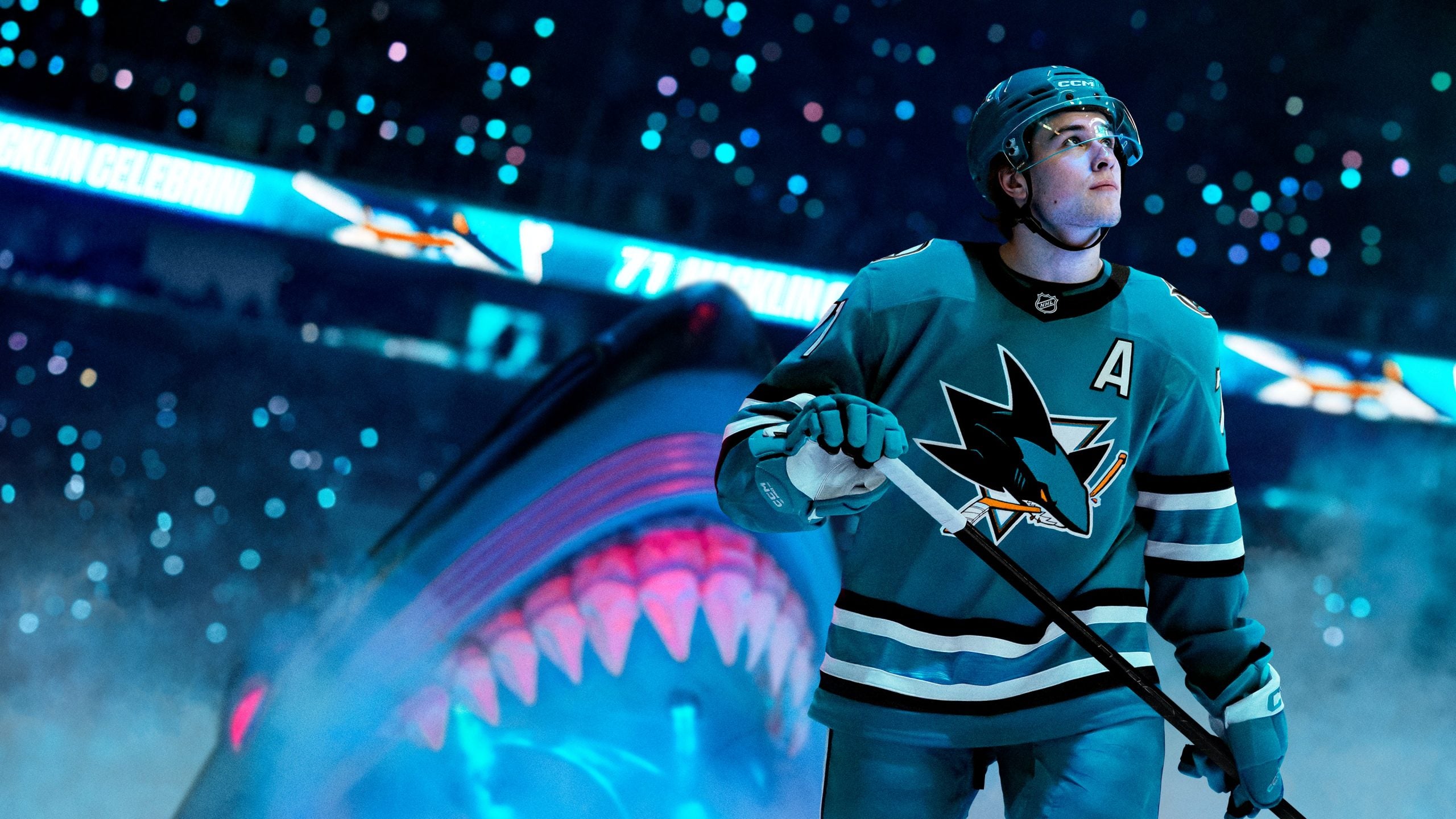
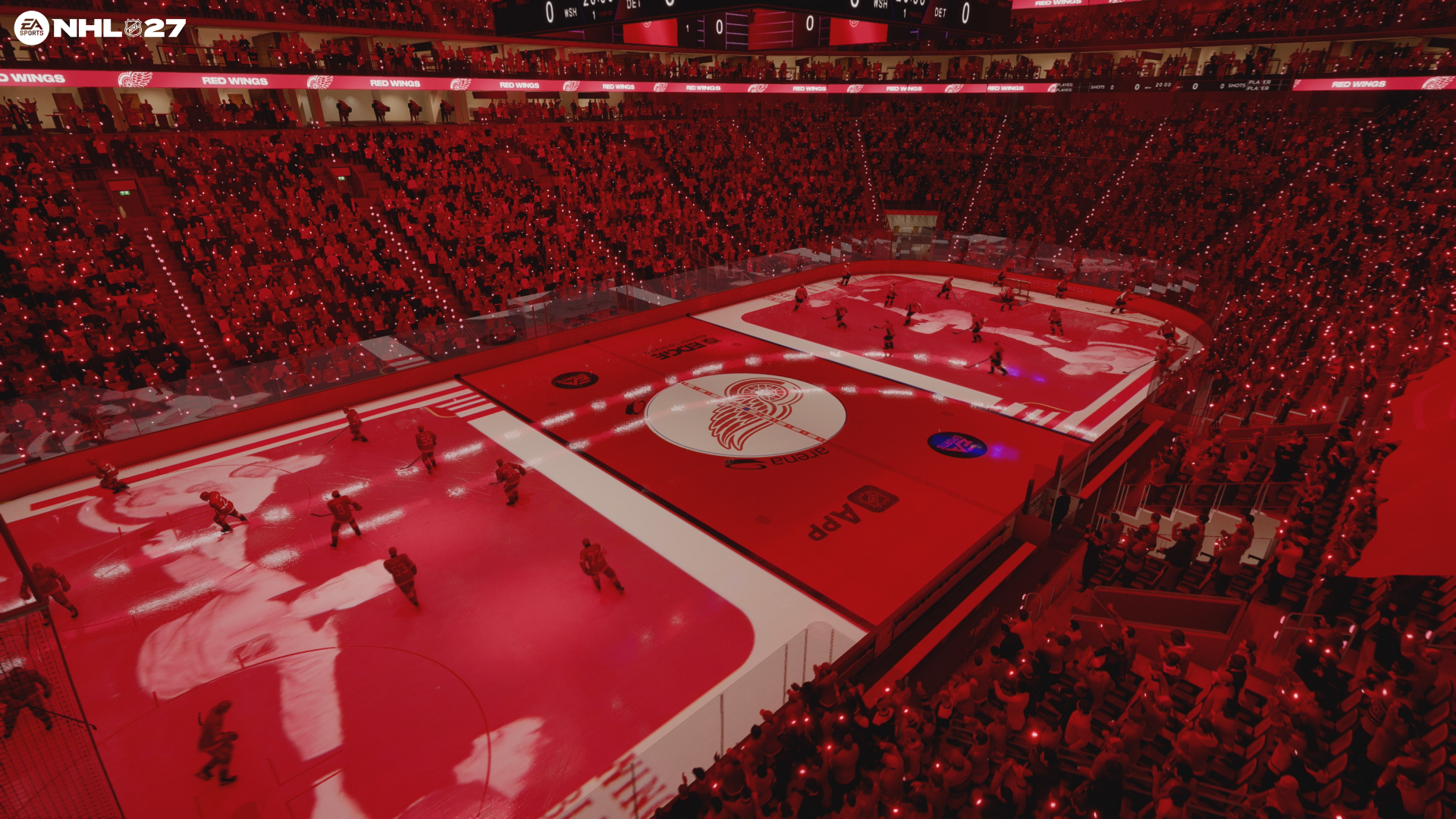
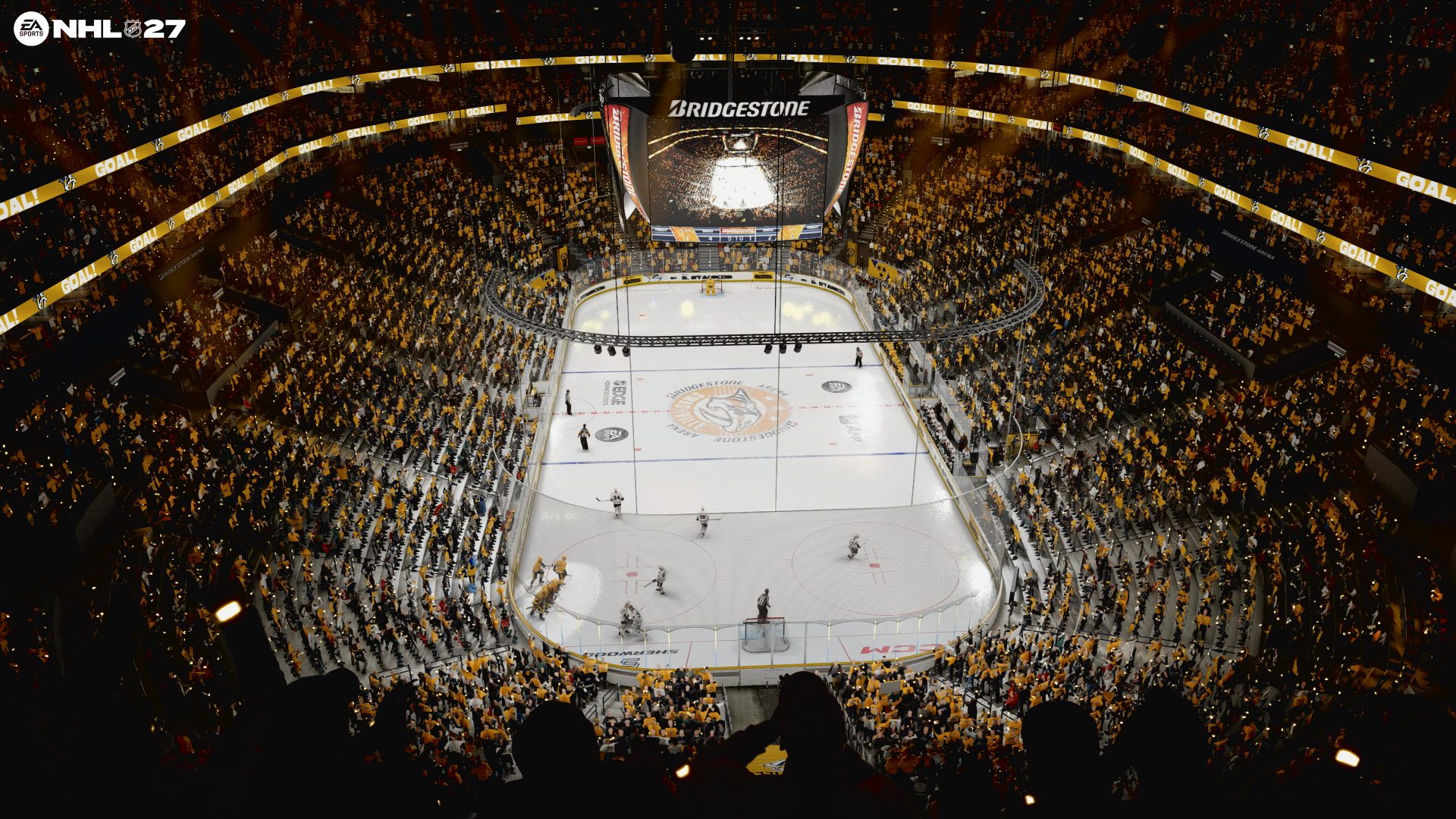
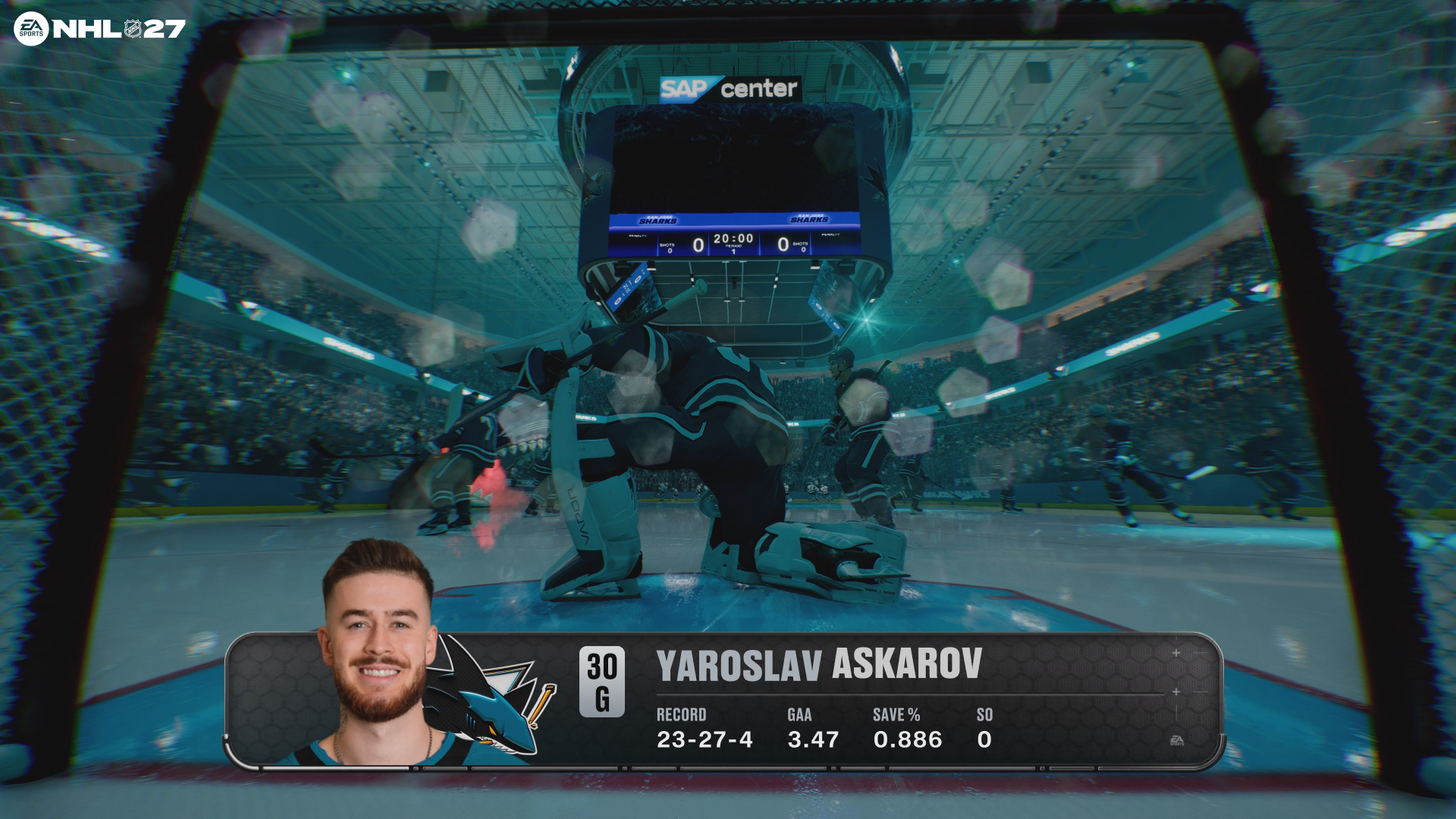
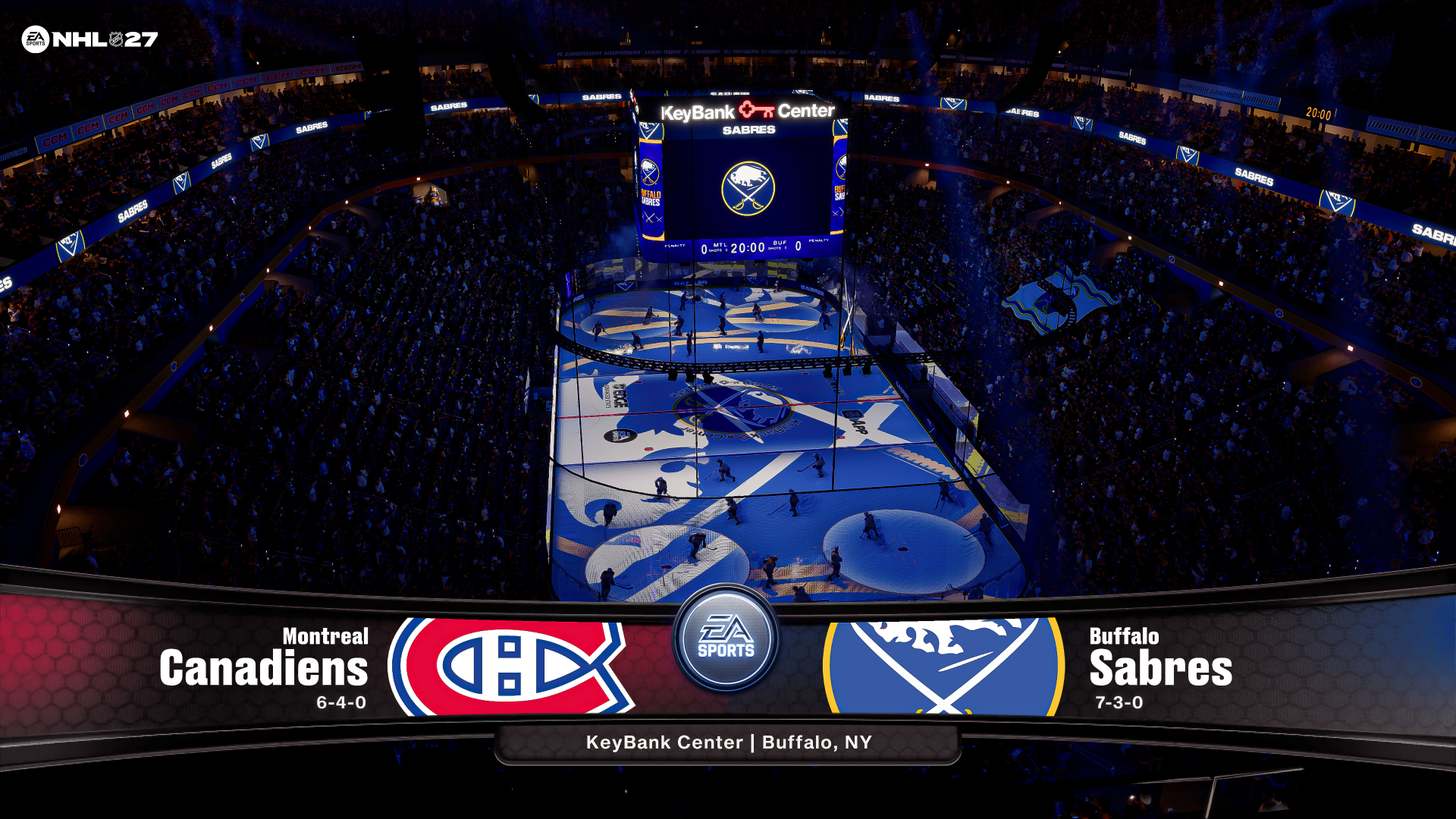
Presentation sees the most noticeable year-over-year effort. EA meticulously overhauled all 32 NHL venues, introducing team-specific goal songs, distinct crowd intensity curves, and a broadcast overlay clearly inspired by the clean, bold NBC packages from the NHL 15 era. Pre-game player intros have also been refreshed, though the novelty wears off quickly once you realize every club shares the same core animation sequence, distinguished only by on-ice projection templates and lighting rigs. Jumping into Montreal’s Bell Centre feels closer to a Saturday night broadcast than ever, even if omitting actual team intro tracks still stings.
The glaring issue with the visual glow-up is its exclusivity. If you venture outside the NHL, particularly into the AHL or European leagues, you run directly into the same tired, stock arenas that have populated the game for generations. EA didn’t need to handcraft every minor-league barn with bespoke geometry, but adding three or four convincing, authentic-feeling generic rinks would have dramatically improved immersion. Instead, the disparity between a shiny NHL showcase and the rest of the hockey world is wider than ever.
In the broadcast booth, John Buccigross and Darren Pang step in as the new lead commentary duo. It’s a needed shakeup after years of familiar voices, though an option to toggle between crews would help reduce fatigue over an 84-game season.
First-year booth pairings always battle growing pains, and this one has its share. The delivery occasionally sounds disconnected from the action on the ice; I’ve buried third-period game-winners only to hear a subdued reaction that felt more suited to a blowout in mid-November.
Gameplay & Modes
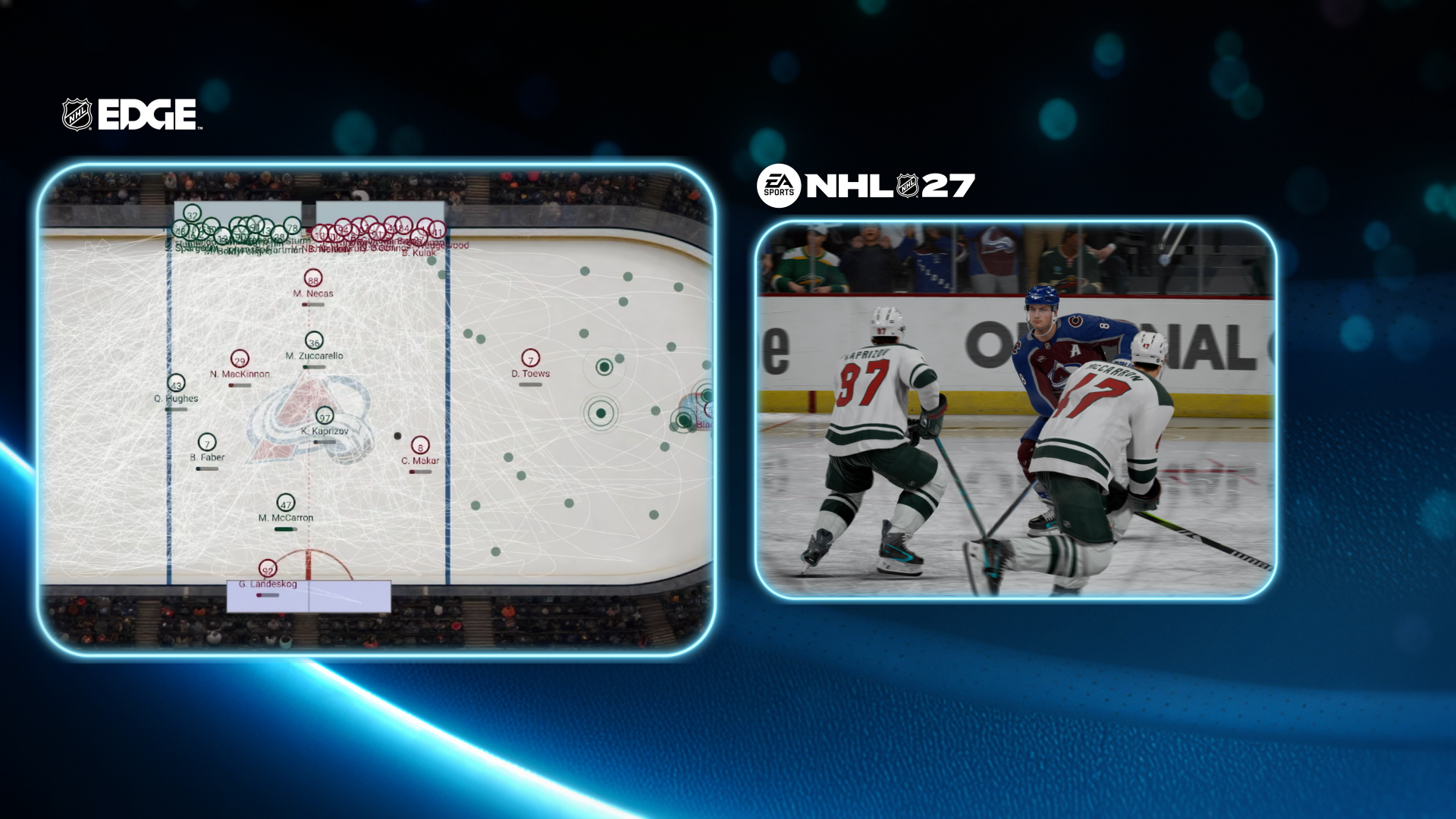
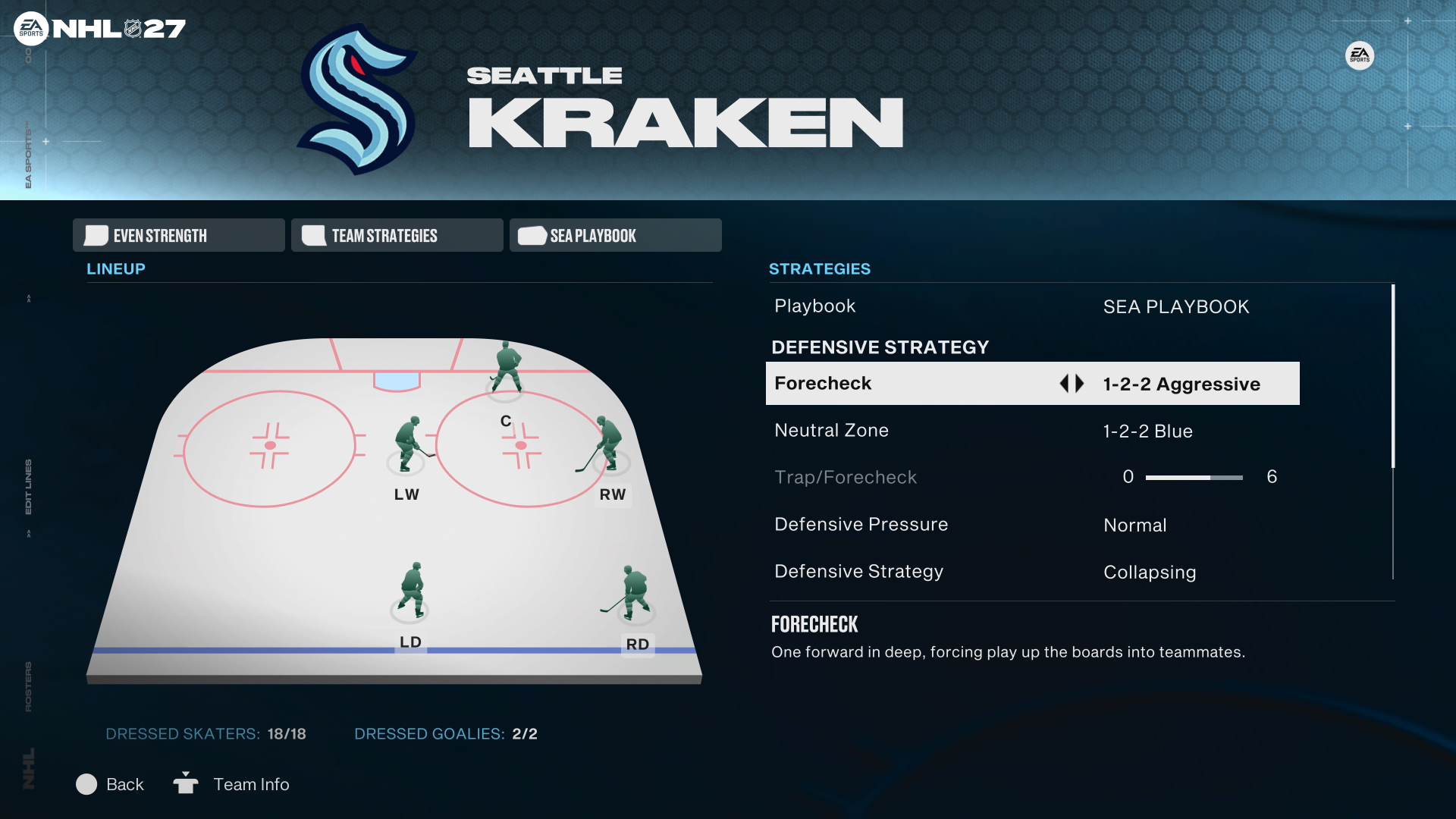
The marquee on-ice addition is “Cohesive Team AI,” which utilizes real-world NHL EDGE tracking data to give all 32 teams distinct tactical blueprints. You do notice subtle systematic differences out of the box, like the Canadiens executing their signature drop-pass regroup on the power play, but it rarely shifts how you actually approach a game.
Once you take the game online, tactical nuances evaporate almost entirely. This is not the fundamental meta shift the series needs; the same high-percentage glitch zones and cross-crease setups that dominated previous cycles remain fully intact here.
The secondary modes fare worse:
Hockey Ultimate Team (HUT): Largely untouched, with the only notable additions being real-world NHL head coaches and their corresponding 32 tactical playbooks.
World of CHEL: An identical offering to the past two releases. A mode that used to be the lifeblood of the community feels completely stagnant. At the very least, EASHL desperately needs CPU player customization so squads can personalize their AI skaters.
Club Playoffs: The absence of the legacy four-game win streak format continues to hurt. Having just two attempts to rattle off four straight wins gave club playoff hockey genuine stakes, and its watered-down successor still hasn’t matched that tension.
NHL 27 lays promising groundwork for the future, but at a steep $89.99 CAD price tag, it is increasingly difficult to swallow paying full freight for what still feels like an extended proof of concept.
NHL 27 is not a broken game, and it represents a firmer mechanical foundation than NHL 26. The arena sound design punches hard, the commentary refresh was long overdue, and having the words “Connected Franchise” back on the home screen is a milestone fans waited a decade to see.
Once again we’re being charged full admission for the trailer, not the feature film. A Connected Franchise mode without CPU teams is a half-measure, non-NHL leagues remain an afterthought, and the online gameplay loop still invalidates real-world hockey systems. For diehards, there’s just enough here to justify lacing up the skates with the crew, but at $90 CAD, it’s hard not to feel like EA is asking us to pay for the future while delivering another year of compromise.
Review Summary
Okay
An Xbox Series X|S code for the Deluxe Edition was provided by EA for review purposes
Once again we're being charged full admission for the trailer, not the feature film.